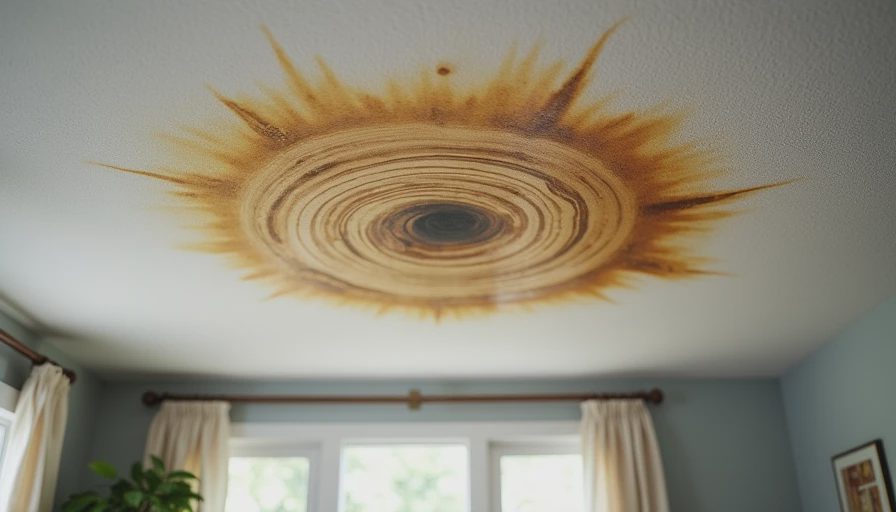
I can’t count how many times I walked into a living room during an inspection or claims visit and saw the homeowner point at the ceiling and say, “It’s been there forever, but it’s dry now so I think we’re good.” Spoiler: you’re usually not good.
That yellow or brownish ring is basically your house leaving you a note in permanent marker. And like most notes from your house, it’s trying to tell you something important before things get expensive. After thousands of claims and 1,200+ inspections, I’ve become fluent in ceiling stain language. Today I’m translating it for you.
Why Water Stains Form Rings (The Science Without the Boring Lecture)
Water finds the path of least resistance. When a leak happens above your ceiling — from a roof, pipe, or condensation — it soaks through insulation and drywall. As it dries, minerals and tannins from wood or asphalt shingles get left behind, creating those classic concentric rings.
Think of it like a tree trunk cross-section or the way brisket fat renders in my smoker — layers tell the history. One ring might mean a single event. Multiple rings or a growing stain? That’s a recurring problem that never fully got fixed.
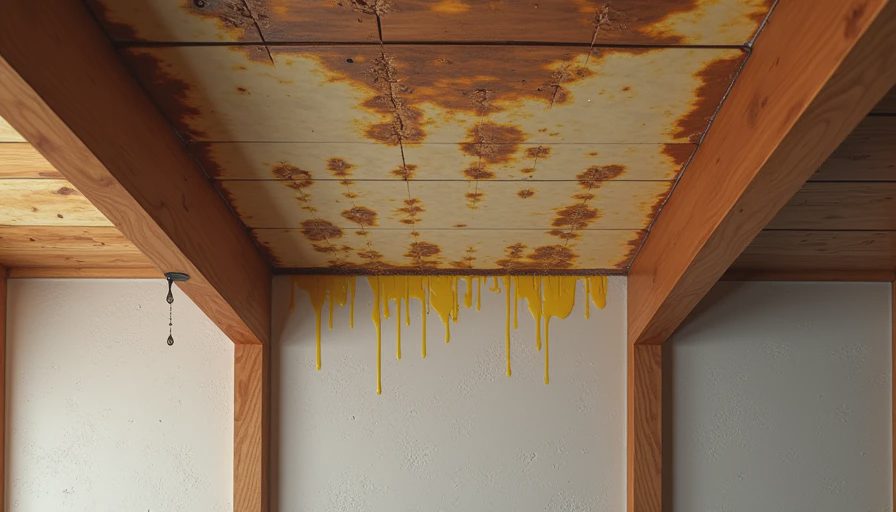
Reading the Timeline: What the Colors and Shapes Actually Mean
Fresh vs. Old:
Bright yellow or light brown, soft edges: Recent (weeks to a few months). The leak may still be active or happened recently.
Dark brown, hardened edges, or flaking paint: Older issue (6+ months). The original leak may have stopped, but damage is done.
White or chalky center with darker outer rings: Multiple wetting/drying cycles. This is the “we’ve ignored this for years” special.
Size Matters (But Not How You Think):
If the stain is smaller than a dinner plate and hasn’t grown in six months, you might have time. Larger than that, or if it’s spreading? Priority.
Location Clues:
Near a bathroom or kitchen: Often plumbing-related (toilet, shower, or supply line).
Along exterior walls or near windows: Roof or gutter overflow.
In the middle of a room on upper floor: Roof leak or HVAC condensation.
Basement ceiling (yes, it happens): Usually plumbing or foundation moisture.
I once adjusted a claim where a tiny yellow ring in the master bedroom turned out to be a pinhole leak in a copper pipe that had been slowly dripping for 14 months. Total damage: $14,200. The homeowner thought it was “just old water damage from before we bought the house.”
The Decision Framework: When to Worry and What to Do
Here’s my practical threshold system — no panic, just clarity:
Green Zone (Monitor):
Stain smaller than a salad plate.
No growth in the last 3–6 months.
No musty smell, no soft drywall, no peeling paint.
Action: Mark the edges with a pencil and date it. Check monthly.
Yellow Zone (Investigate This Month):
Multiple rings or any visible growth.
Soft or spongy feeling when you gently press (use a screwdriver handle, not your finger).
Musty odor or visible mold on the attic side.
Action: Get in the attic or crawlspace above it if safe. Take photos. Call a pro if you see active moisture.
Red Zone (Call Someone This Week):
Active dripping or wet spots.
Large stains (>2 feet) or sagging drywall.
Electrical fixtures nearby (lights, fans) that could be compromised.
Action: Shut off water to the area if possible. Professional inspection ASAP.
Pro Tip from the Field: Always check the other side. A small ceiling stain can hide a much larger problem in the attic. I’ve seen pristine living rooms with attics that looked like they hosted a pool party.
Real Claim Story (Anonymized, Of Course)
Case file notes I still remember: Young family in Aurora. Small yellow ring appeared after a heavy summer hailstorm. They painted over it. Six months later during winter, the ceiling collapsed after repeated freeze-thaw cycles on a compromised roof flashing. Repair cost: $9,800. Insurance paid most of it but dinged them for “lack of maintenance” on the original issue. The adjuster (me, at the time) wrote in the file: “Homeowner could have prevented escalation with timely roof inspection.”
Don’t paint over it without investigating. That’s just giving your future self a more expensive surprise.
Tools and Tricks I Actually Use
Bright flashlight or headlamp for attic checks.
Moisture meter (cheap ones on Amazon work fine for homeowners).
Phone camera with timestamp — document everything.
Good ladder and common sense (if it feels unsafe, hire it out).
And remember my 3D printing habit — sometimes the best temporary fix is a custom-printed bracket or cover while you schedule the real repair. But never skip the real fix.
What This Tells You About Your House Overall
A single water stain isn’t the end of the world. But it’s a warning light on your house’s dashboard. Houses are systems. One leak often points to others — poor ventilation, aging roof, deferred maintenance. Reading these signs early is how you stay ahead of the big repair bills.
My kids have learned this too. Noah now points out “brown circles” when we visit friends’ houses (sorry, other parents). Maya just likes poking at peeling paint. Family bonding, Shepherd style.
The house is always talking. Most people just don’t listen until it starts yelling with a flood.
A ten-minute check today saves a ten-thousand-dollar call tomorrow. Next time you’re upstairs, take 30 seconds and look up. That yellow ring might be trying to save you money.
If you’ve got a mystery stain, describe it in the comments. I’ll help you read it. And go check your ceilings this weekend — especially after any recent rain or snow.
Your future self (and your wallet) will thank you.



No comments yet.