You are standing in the basement in January, listening to the furnace start, stop, and start again. The house is warm, so you tell yourself it is fine. That is how many homeowners treat furnace lifespan: as a number to look up only after the heat fails. I used to write checks for heating-related claims. Now I look for the quieter clues that appear months earlier.
A gas furnace commonly lasts about 15 to 20 years, while a well-maintained unit can sometimes run longer. Electric furnaces often reach 20 to 30 years because they have fewer combustion components. Those are useful ranges, not expiration dates. A 12-year-old furnace with a cracked heat exchanger deserves faster attention than a clean, quiet 19-year-old unit that has been serviced regularly.
What Really Determines Furnace Lifespan
The biggest factors are installation quality, maintenance, operating hours, fuel type, and the local climate. A furnace in Minneapolis may run several months longer each year than one in Raleigh. More cycles mean more wear on the blower motor, ignition system, bearings, and control board. An oversized furnace can also age poorly because it heats the house quickly, shuts down, and repeats that short-cycle pattern all day.
Maintenance does not make a furnace immortal, but it can prevent small defects from becoming expensive failures. A yearly professional inspection should include combustion safety, venting, electrical connections, airflow, temperature rise, and the heat exchanger. Replacing the filter on the schedule appropriate for your system also matters. A clogged filter forces the blower to work harder and can contribute to overheating or poor air distribution.
I once inspected a 16-year-old furnace that looked ordinary from across the mechanical room. The homeowner had spent roughly $180 on annual service and filter changes. The unit was not pretty, but the heat exchanger was intact, the venting was sound, and the temperature readings were stable. Its age alone was not a replacement recommendation.

The Warning Signs That Change the Decision
Age is only one part of furnace lifespan. Pay attention to what the furnace is doing. Uneven temperatures, frequent cycling, delayed ignition, a yellow or wavering burner flame, unusual banging, and a persistent burning smell all justify professional evaluation. A carbon monoxide alarm sounding is an emergency: leave the home, call emergency services or the gas utility as appropriate, and do not keep operating the appliance.
Some noises are annoying but not immediately dangerous. A brief rattle at startup could be a loose panel, while repeated grinding may point to a failing motor. The important distinction is change. If a furnace has always made a mild click and the heat output is steady, mention it at the next service visit. If the sound appeared last week and is getting louder, schedule service now.
A thermostat that cannot hold the set temperature, a room that suddenly stays cold, or a system that runs continuously can indicate airflow problems, duct issues, a failing component, or an undersized unit. Do not assume a new smart thermostat will solve the problem. I have seen homeowners spend $250 on controls when the real issue was a $900 blower motor and a severely restricted return vent.
Repair or Replace: The Math I Use
For a newer furnace, repair is usually the sensible choice when the problem is a capacitor, igniter, flame sensor, limit switch, or minor electrical component. Common service calls can land around $150 to $500, depending on diagnosis and labor. A blower motor, inducer motor, or control board can run from roughly $500 to $1,500. Prices vary by equipment, access, and region, but the relationship is clear: a modest repair is easier to justify on a 7-year-old furnace than on a 19-year-old one.
Replacement often becomes reasonable when the unit is near the end of its expected furnace lifespan and the repair approaches one-third to one-half of a replacement quote. A standard furnace replacement commonly falls around $4,000 to $8,000, with complex ductwork, difficult access, premium equipment, or high-cost markets pushing higher. Get a written quote that separates equipment, labor, permits, disposal, thermostat work, and any duct modifications.
I used to think every old furnace should be replaced before it failed. Field inspections corrected that assumption. Replacing a functioning 14-year-old furnace solely because it is old can waste thousands of dollars. Replacing a 19-year-old unit after two major repairs in one season can be a way to avoid an inconvenient winter breakdown and rushed decision-making.
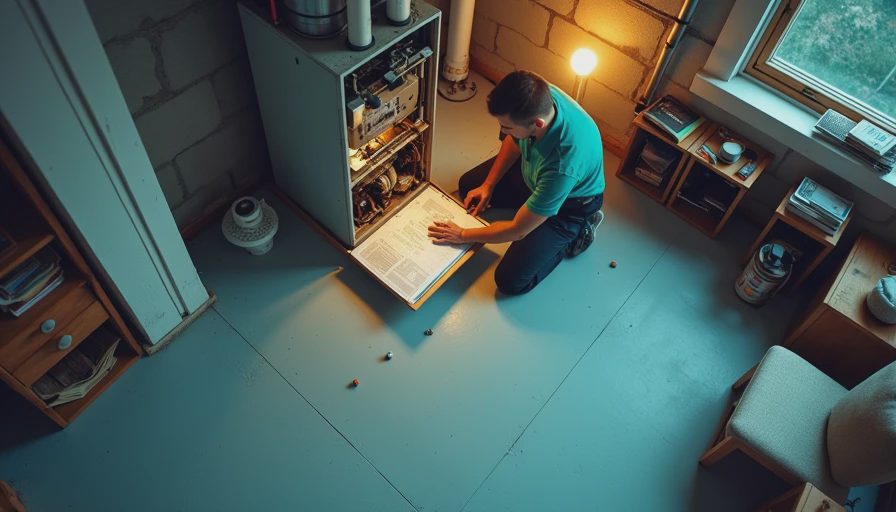
A Simple Furnace Age Check Before You Call
Start with the data plate or installation paperwork. Look for the manufacturer, model number, serial number, installation date, and fuel type. The serial number may encode the production year, but decoding methods differ by manufacturer, so do not rely on a random online chart if the answer affects a major purchase. An HVAC professional can usually identify the approximate age during a service visit.
Next, write down three observations: how often the unit cycles, whether every room receives reasonable heat, and whether any new noise or smell has appeared. Check the filter condition and note when it was last changed. Do not remove panels, bypass safety controls, adjust gas pressure, or inspect combustion components yourself. The goal is to collect useful information, not turn a warning sign into a repair project.
Finally, look at prior invoices. A service history showing repeated igniter, motor, or control-board repairs tells a different story than one showing annual cleaning and no major failures. If you are buying a home, ask for these records and have the furnace evaluated during the inspection period. A furnace with limited remaining life is not automatically a bad purchase, but it belongs in the budget.
How to Stretch the Remaining Years
The best protection for furnace lifespan is boring: keep airflow available, schedule professional service before heating season, and respond to changes instead of normalizing them. Keep storage, paint cans, cardboard, and cleaning supplies away from the furnace. Make sure vents and returns are not blocked by furniture or rugs. Confirm that carbon monoxide alarms are installed according to local guidance and have fresh batteries or reliable power.
Do not chase every efficiency upgrade. A new furnace can reduce energy use, but savings alone may not justify replacing a safe, reliable unit years early. Ask for a side-by-side estimate showing installation cost, expected operating cost, warranty terms, and likely repair exposure. Brand names matter less than correct sizing, competent installation, proper venting, and accessible service.
A ten-minute check today saves a ten-thousand-dollar call tomorrow. Walk to the mechanical room, record the furnace model and age, listen for a new sound, and book service if the pattern has changed. That small record gives you control over the next decision instead of forcing you to make it on the coldest night of the year.
No comments yet.