You are standing in the basement after a heavy rain. The floor is dry, the furnace is quiet, and you are already picturing your furniture in the room. Then your inspector points to a faint brown line on the joist above. This is where homes home inspection work earns its fee. The visible house is only half the story; water, wiring, drainage, and aging equipment usually hide where buyers do not look.
I used to write checks for home damage claims. Now I write about the clues that can keep you from needing one. A professional inspection is not a guarantee that nothing will break. It is a prioritized snapshot of the property, showing what needs attention now, what can wait, and what deserves a specialist's opinion.
What a homes home inspection actually covers
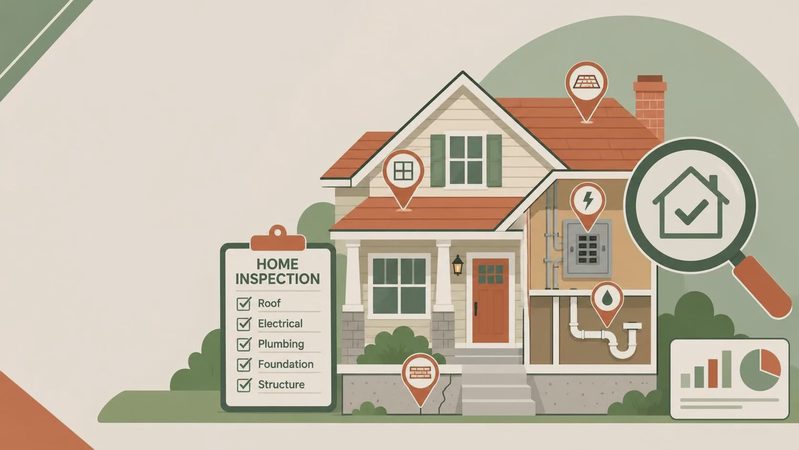
A standard inspection usually examines the roof surface and drainage, exterior walls, foundation, attic, visible plumbing, electrical panels, heating and cooling equipment, insulation, ventilation, doors, windows, and major built-in appliances. The inspector is looking for accessible conditions, not dismantling walls or predicting the future. A buried sewer line, concealed mold, or underground oil tank may require a separate evaluation.
The report should describe defects and their likely significance, but it is not a repair estimate or a code-compliance certificate. A homes home inspection can identify a loose handrail, an active roof leak, or a furnace near the end of its service life. It cannot tell you with certainty whether a component will fail next month.
Ask what the inspector excludes before scheduling. Some inspectors do not inspect pools, detached garages, septic systems, wells, chimneys, or fireplaces beyond a visual review. If the home has a crawlspace with limited access, that limitation should appear clearly in the report. You want fewer surprises, not a polished document that quietly leaves out the expensive areas.
The expensive clues hiding in plain sight
Water is the first thing I investigate because it creates a long trail of secondary damage. Look for fresh paint below windows, swollen trim near exterior doors, rust under sinks, staining around toilet bases, and mineral deposits on basement walls. One claim file involved a toilet supply connection that dripped slowly for months. The leak was not dramatic, but it damaged the subfloor and required about $8,600 in drying, flooring, and reconstruction.
Roof age matters, but roof condition matters more. A fifteen-year-old asphalt roof with intact flashing may have useful life left. A newer roof with damaged step flashing can leak during the next wind-driven storm. Ask the inspector to distinguish worn shingles from installation concerns and to recommend a licensed roofer when the surface or flashing cannot be evaluated safely.
Foundation cracks need context. A narrow, dry, stable crack is different from one that is widening, offset, wet, or accompanied by a sticking door. If a crack is wider than a credit card, shows displacement, or collects water, get a structural or foundation specialist involved before your inspection contingency expires. This is why homes home inspection findings should be sorted by consequence rather than by the number of pages in the report.

How to read the report without panicking
Inspection reports often contain dozens of minor observations. A missing outlet cover and a failing retaining wall should not receive the same priority. I sort findings into three buckets: safety, active damage, and predictable replacement. Safety includes exposed wiring, missing guardrails, unsafe combustion equipment, and nonfunctional smoke or carbon monoxide alarms. Active damage includes leaks, rot, water intrusion, and movement. Predictable replacement covers aging furnaces, water heaters, roofs, and air conditioners.
For each major item, ask four questions: Is it working today? Is it causing damage today? What happens if it waits six months? What professional should evaluate it? A homes home inspection report becomes useful when it answers those questions in plain language. It also gives you a negotiation framework. A $500 plumbing repair is different from a $12,000 roof replacement, even if both appear under “recommended maintenance.”
Do not demand that a seller correct every cosmetic defect. That approach can distract from drainage, electrical safety, and structural movement. Instead, request documentation, a qualified evaluation, a credit, or a price adjustment for the items that materially affect ownership cost. Keep receipts and specialist reports after closing; they can help establish when a problem was discovered and addressed.
Inspection timing for buyers and owners
Schedule the inspection early enough to use your contract's inspection contingency. In many transactions, that means booking it within the first few days after the offer is accepted, not waiting until the final weekend. Attend the inspection for at least part of the visit. A good inspector can show you the main water shutoff, electrical disconnect, furnace filter location, attic access, and signs that deserve monitoring.
If you already own the property, a homes home inspection can still be valuable after a major storm, before listing, or when you have bought an older home without reliable records. A pre-listing inspection lets you choose which repairs to make instead of discovering them while a buyer is negotiating. For a house with an aging roof or basement moisture, getting two or three targeted estimates is usually more useful than guessing from an online average.
Here is a practical sequence. First, gather permits, warranties, utility bills, and previous inspection reports. Next, walk the exterior after rain and note where water collects. Then review the attic, basement, and mechanical areas with the inspector. After the visit, separate urgent defects from long-term maintenance. Finally, price only the first round of work; do not spend $5,000 preventing a $200 nuisance before handling an active leak.
Common mistakes that cost buyers money
The first mistake is choosing an inspector solely because the fee is low. A $250 discount is insignificant beside a missed roof leak or unsafe electrical panel. Compare experience, sample reports, licensing requirements in your state, insurance coverage, and whether the inspector welcomes questions. Referral lists from agents can be useful, but interview the inspector yourself.
The second mistake is treating a new home as defect-free. New construction can have grading problems, incomplete flashing, loose connections, unfinished insulation, and poorly adjusted doors. A warranty inspection before the builder's deadline can document items while the builder is still responsible for correcting them. Homes home inspection work on a new property is often less about age and more about workmanship.
The third mistake is ignoring maintenance history. A clean basement does not prove the sump pump works during a power outage. A quiet furnace does not prove it has been serviced. Ask for installation dates, service invoices, roof warranties, and records of water intrusion. If the seller cannot document an expensive system, budget as though its remaining life is uncertain.
Your ten-minute follow-up plan
After receiving the report, walk the property with a flashlight and your phone. Photograph every active stain, exterior discharge point, crack, and mechanical label. Mark each issue as urgent, this season, or monitor. Call the appropriate professional for the urgent items rather than trying to diagnose a complicated system from a video tutorial.
If you are buying, use the report to make a measured decision, not an emotional one. Some defects justify renegotiating or walking away; others are ordinary ownership costs that should be reflected in the price. If you are staying, create a maintenance calendar and check the same areas after heavy rain, deep freezes, and the first major heat wave.
A homes home inspection does not prevent every failure. It gives you the timing and evidence to act before a small condition becomes a claim. A ten-minute check today saves a ten-thousand-dollar call tomorrow. Now go walk your basement, look under the sinks, and spend the next ten minutes finding the clue you would rather discover early.

No comments yet.