You are standing in a basement after a heavy rain. The floor is dry, the furnace is running, and nothing looks obviously wrong. That is where home inspectors earn their fee. Home inspectors are trained to look past the clean paint and staged furniture for conditions that can become expensive repairs. I used to write checks for those repairs as a claims adjuster. Now I write about them so you do not need the check.
A typical inspection costs roughly $300 to $700 for a standard single-family home, with larger or older properties often costing more. That can feel like a painful line item during a purchase, but it is small beside a $4,000 sewer repair, an $8,000 roof replacement, or $15,000 in water damage. The inspection is not a guarantee. It is a snapshot of visible conditions that helps you decide what deserves attention before you own the problem.
What home inspectors actually examine
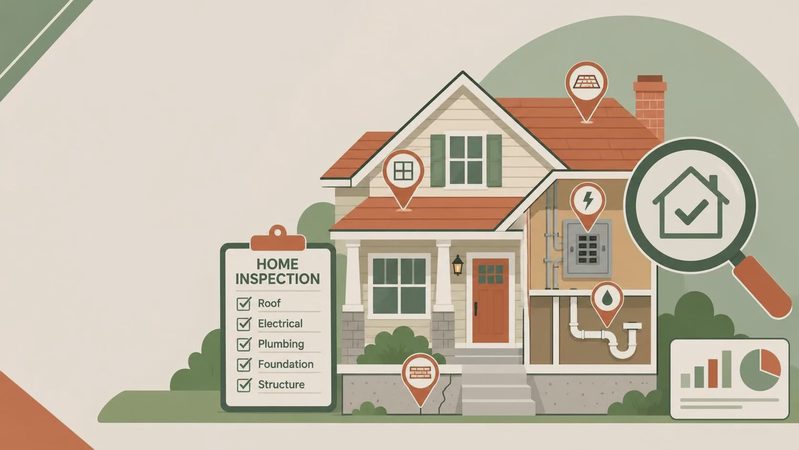
Home inspectors generally review the roof, exterior walls, foundation, attic, insulation, plumbing, electrical system, heating, cooling, windows, doors, and visible appliances. They are looking for safety concerns, active leaks, deferred maintenance, damaged materials, and systems nearing the end of their useful life. They may run faucets, test a sample of outlets, operate the garage door, inspect the attic access, and examine the crawlspace when it is safely accessible.
They are not usually opening walls, pulling up flooring, dismantling equipment, or confirming that every buried drain is clear. A standard inspection also does not replace a sewer scope, chimney inspection, radon test, pest inspection, or structural engineer's evaluation. Those are separate services for specific risks. Good home inspectors explain that boundary instead of pretending one report can reveal everything hidden inside a house.
The report should distinguish between a defect and routine maintenance. A missing handrail on a basement stairway is a safety issue. A dirty furnace filter is maintenance. A roof with curled shingles and exposed underlayment is a near-term concern, not a cosmetic note. Read the wording carefully. “Recommend evaluation” can mean a minor question, or it can mean the inspector saw something outside the scope of a visual inspection.

The findings worth taking seriously
The most important part of an inspection report is not the number of pages. It is the pattern. One cracked outlet cover is usually less important than an overloaded electrical panel, several ungrounded outlets, and heat discoloration near a breaker. One ceiling stain may be old. A stain plus damp insulation, soft drywall, and a musty attic smell suggests an active moisture problem.
I remember a claim involving a toilet that had been slowly leaking at its base. The homeowner had noticed a loose bathroom tile but assumed the floor was settling. By the time the toilet was removed, the subfloor and nearby framing needed replacement. The final bill was about $8,600. The original warning was small enough to ignore and obvious enough to catch during a careful inspection.
Water deserves priority because it travels. Inspectors look beneath sinks, around toilets, near washing machine connections, at water heaters, and along foundation walls. A dry surface does not prove there has never been a leak. Staining, swollen trim, rust, mineral deposits, and recently painted patches tell a story. If an inspector recommends a plumber or leak specialist, schedule that evaluation before closing rather than treating it as paperwork.
How to read the report without panicking
Most inspection reports contain a long list of observations. That does not mean the house is falling apart. Older homes can have dozens of minor notes, including cracked caulk, worn weather-stripping, loose cabinet hardware, or a missing screen. Those items may be worth tracking, but they should not distract you from active leaks, unsafe wiring, foundation movement, failing heating equipment, or major roof deterioration.
I sort findings into three groups: immediate safety, active damage, and planned maintenance. Immediate safety includes exposed wiring, missing smoke alarms, unsafe stairs, and carbon monoxide concerns. Active damage includes current leaks, sewage backup evidence, deteriorating structural wood, and water entering the basement. Planned maintenance includes aging shingles, a water heater near the end of its expected life, and gutters that need cleaning.
Ask home inspectors to explain the timing in plain language. “Replace soon” is not precise enough. Ask whether soon means this week, before the next rainy season, or within three years. A roof that has one or two years left should affect your budget and negotiation, but it is different from a roof actively allowing water into the attic. The distinction helps you spend money where it prevents damage rather than where it merely improves appearance.

When a specialist should follow
Home inspectors are generalists. That is their strength, but it also defines their limits. If the report identifies a suspected foundation problem, hire a structural engineer rather than asking a general contractor for a free opinion tied to a repair proposal. If the sewer line is not visible, order a camera scope. If the home has a private well or septic system, use qualified specialists for those systems.
The same logic applies to heating and electrical equipment. A visual inspection can identify a rusted flue, damaged venting, or an aging furnace, but a licensed HVAC professional can evaluate combustion, heat exchange, and safe operation. An electrician can determine whether a panel, wiring method, or service capacity needs correction. These follow-up inspections often cost $100 to $400, which is inexpensive compared with discovering the problem after closing.
New construction deserves an inspection too. I have seen brand-new homes with missing attic insulation, poorly sloped grading, loose plumbing fittings, and doors that did not latch correctly. A builder's warranty may cover those issues, but the warranty is easier to use when the defects are documented early. A pre-drywall inspection and an inspection before the final walkthrough can catch different problems.
Choosing and using an inspector
Do not choose home inspectors solely because they are the cheapest name on a search page or because an agent recommends them without explanation. Ask about licensing requirements in your state, professional training, errors-and-omissions coverage, inspection duration, and whether the inspector enters attics and crawlspaces when safe. A thorough inspection commonly takes two to four hours, depending on size, condition, and access.
Attend the inspection if possible. You do not need to follow every step, but seeing the inspector point out a loose flashing detail or a damp crawlspace corner teaches more than a photograph. Ask questions without turning the appointment into a repair consultation. The goal is to understand the condition, urgency, and likely next specialist—not to receive free construction work advice.
Afterward, get repair estimates for the largest items before your inspection contingency expires. A $900 roof repair estimate and a $14,000 replacement estimate lead to very different decisions. Sellers may repair, provide a credit, reduce the price, or decline. Your leverage is strongest before closing. Once you own the house, the negotiation ends and the maintenance ledger begins.
The inspection that prevents the next claim
A home inspection is not only for buyers. Homeowners can hire home inspectors before listing, after buying an older property, or when a house has experienced repeated moisture problems. A pre-listing inspection gives you time to address defects without negotiating under pressure. A maintenance inspection can identify the small failures that never become insurance claims if someone catches them early.
Walk through the report every spring and fall. Check whether the roof concern was addressed, whether the bathroom leak returned, and whether the recommended specialist provided documentation. Keep receipts and service records in one folder. If you ever sell or file a claim, a clear maintenance history helps establish what happened and when.
I used to think a clean, dry basement meant the house was fine. Field inspections changed my mind. Water can enter at one corner, travel behind a finished wall, and wait months before showing itself. That is why a small stain, a musty odor, or a new crack deserves a decision, not a shrug.
A ten-minute check today saves a ten-thousand-dollar call tomorrow. Now go walk your basement, look under the sinks, and review the last inspection report. You do not need to fix everything today, but you do need to know which finding is quietly getting worse.

No comments yet.