
You open your home inspection report and find 70 pages of photographs, arrows, and things that apparently need attention. Take a breath. A long report does not automatically mean a bad house. Start with active water intrusion, immediate safety concerns, and expensive systems whose condition is uncertain. Then ask the inspector which findings need a specialist before your inspection deadline. A loose handrail and a leaking roof may both appear in the same summary, but they do not deserve the same response.
Start with the summary, then read the details
The summary is a map, not the whole trip. It usually highlights significant findings, but the inspector may put useful context, limitations, and recommendations elsewhere. Read the full home inspection report, including captions and sections marked not inspected or inaccessible.
For each finding, identify three things: what the inspector observed, where it is, and what they recommend next. “Staining on the attic sheathing” is an observation. “Have a qualified roofer evaluate for an active leak” is a next step. Neither sentence alone tells you how much a repair will cost.
Pay attention to the wording. “Unable to determine” is not the same as “no problem found.” A roof covered in snow, a locked electrical panel, or a crawlspace blocked by stored items can leave important questions unanswered. Ask whether access can be arranged before your deadline and whether a return visit is available.
Photographs help locate an issue, but they rarely establish its full extent. A close-up of a stain may not show whether the surrounding framing is affected. Ask the inspector to walk you through anything you cannot locate or understand.

Sort findings by urgency, not by page count
A home inspection report may use colors or categories, but inspectors do not all rank problems the same way. Use the actual description to decide what happens next.
Active water deserves prompt attention. A dripping supply line, wet ceiling, or water entering a basement can damage materials while you wait for estimates. Ask the inspector whether the area was wet at the inspection and whether the source was identified. A past stain that was dry during the visit still warrants questions; dry at one moment does not prove the leak is fixed.
Treat a suspected gas leak, a sounding carbon monoxide alarm, or exposed live electrical parts as immediate safety issues, not negotiating points to revisit next week. Leave the area when appropriate, avoid operating switches or flames if gas is suspected, and contact the utility or emergency services from a safe location. For other electrical defects, arrange a qualified electrician rather than assuming every panel comment is an emergency.
Structural movement needs context. A narrow drywall crack can be cosmetic, while a widening foundation crack paired with displaced masonry or sticking doors deserves professional evaluation. A photograph and a single width measurement cannot reliably establish whether a crack is moving or whether the structure is safe. Ask a structural engineer when the inspector recommends one or when movement is substantial or ongoing.
Aging equipment is a different category. An older furnace or water heater may be operating today and still be near replacement. Ask about observed condition, service history, and whether a specialist can evaluate it. Age alone is not proof that equipment has failed.
Understand what an inspection does not cover
A standard home inspection is generally a visual, noninvasive assessment of accessible areas and systems. The inspector is not usually opening walls, moving the seller's belongings, or guaranteeing that every component will work after closing. Read the agreement and report for the actual scope; requirements and practices vary by location and inspector.
Some concerns may require a separate service, such as a sewer scope, radon test, pest inspection, or evaluation of a private well or septic system. Whether those are appropriate depends on the property, local conditions, and what the general inspection reveals. A clean general inspection is not a substitute for a test that was never performed.
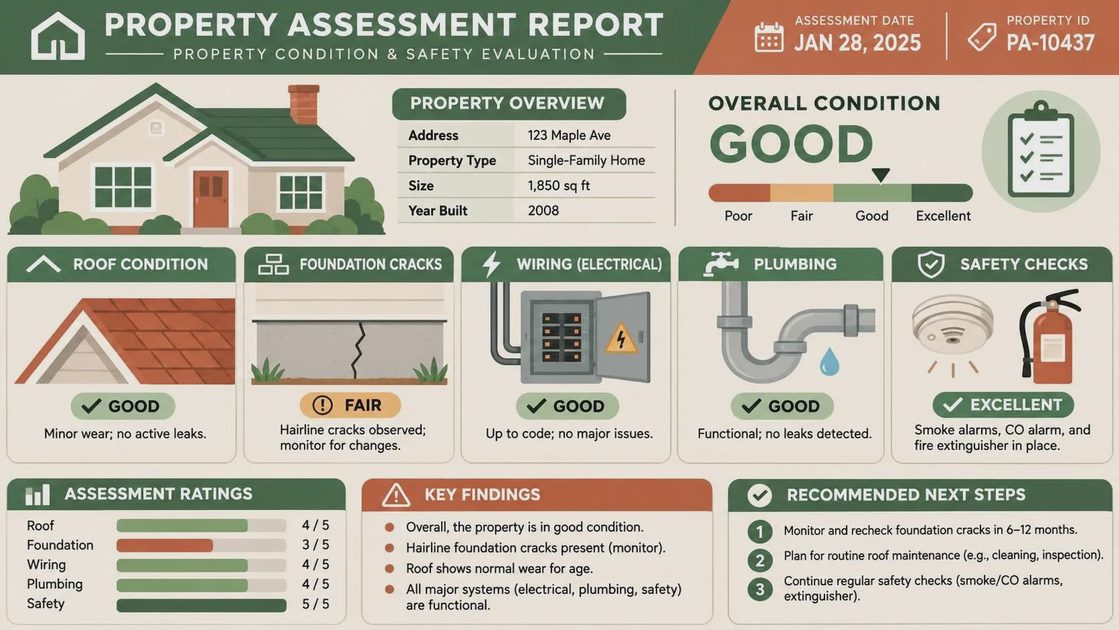
In your home inspection report, look for limitations alongside findings. An inspector who could not access a crawlspace cannot tell you what is happening under that part of the house. That gap may matter more than a photographed cosmetic defect. Ask your agent or attorney how to request access or additional time under your contract.
Turn findings into estimates and negotiations
Before asking for money or repairs, get the right person to define the problem. A roofer can assess a suspected roof leak; a plumber can investigate a drain problem; an electrician can evaluate a panel concern. For significant movement or questions about structural design, an engineer may be the appropriate first call. Ask for a written scope and estimate, including what the contractor cannot confirm without opening materials.
Costs vary widely by location, access, and hidden damage. A small plumbing repair may cost a few hundred dollars, while a roof replacement or extensive water-damage repair can reach many thousands. Do not turn a photograph into a firm budget. Get property-specific estimates before deciding whether a finding changes the deal.
A seller may agree to make repairs, offer a credit, reduce the price, or decline your request. Your options depend on the contract and local rules. If repairs are promised, put the scope, qualifications, permits where required, documentation, and timing in writing. A credit can give you more control over the work after closing, but confirm with your lender and closing professionals how credits can be applied.
Watch the calendar. Inspection, objection, and financing deadlines can arrive before a specialist has an opening. Ask about scheduling as soon as the general inspection identifies a concern, and discuss any needed extension before the deadline expires.
Make a maintenance plan for the rest
Not every item in a home inspection report belongs in a negotiation. A missing doorstop, worn weatherstripping, or minor finish damage can go on a later list if there is no related safety or water concern. Group small jobs so they are practical to address, but keep them separate from active leaks and unresolved hazards.
Save the report, specialist estimates, seller disclosures, and repair invoices together. After closing, revisit accessible areas identified in the report, especially after heavy rain. New moisture, a growing stain, or a change in a crack is a reason to call an appropriate professional rather than wait for an annual check.
Insurance is not a maintenance plan. Coverage depends on the policy and cause of damage, and damage associated with ongoing leakage or neglected maintenance may not be covered. Ask your insurer about your policy instead of assuming a future claim will pay for a known problem.
Today, mark every active leak, safety concern, inaccessible area, and recommended specialist evaluation in your report, then make the calls that fit your deadline.



No comments yet.