You are standing in the basement after a hard rain. The floor is dry, the furnace is running, and nothing looks dramatic. Then your inspector points to a dark line near the rim joist. This is where home inspection findings become useful: not as a list of scary possibilities, but as a way to decide what deserves money and attention first.
I used to write checks for property damage. Now I write about the small conditions that lead to those checks. Most inspection reports contain dozens of observations, but only a few usually deserve immediate action. The goal is to separate a safety issue, a water issue, and an aging component from ordinary maintenance. A ten-minute check today saves a ten-thousand-dollar call tomorrow.
How to read home inspection findings
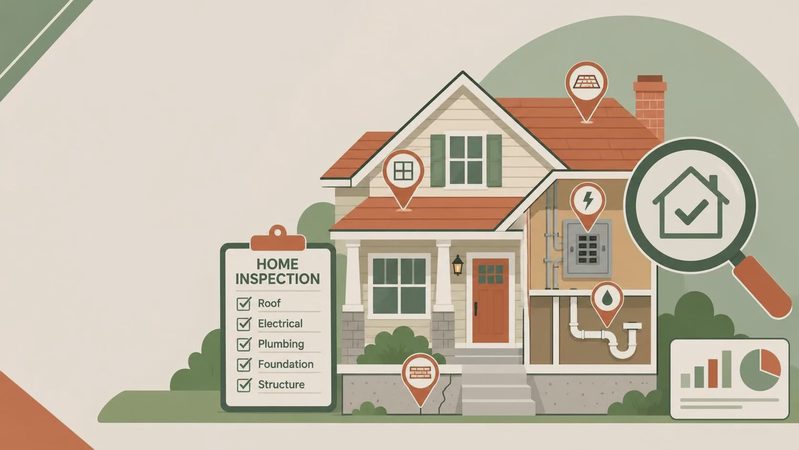
The useful home inspection findings are the ones tied to consequence, not just appearance. A loose handrail is a safety concern. A missing piece of roof flashing is a water concern. A thirty-year-old water heater is a planning concern, even if it still produces hot water every morning.
Ask three questions about every item. What can fail? How quickly could it fail? What happens if I wait six months? Those questions turn a long report into a short priority list. I generally place findings into four groups: address now, schedule within a few months, monitor, or simply maintain.
“Repair recommended” does not always mean “emergency.” Inspectors are trained to document conditions, and they should document them. A report may mention a minor crack in a garage slab, a dirty HVAC filter, and active roof deterioration in the same section. Those are not equal problems. Read the explanation, look at the photographs, and pay attention to words such as active, leaking, unsafe, deteriorated, or structural.
Case file from my claims years: a homeowner ignored a small ceiling stain under a bathroom for nearly a year. The stain looked unchanged, but water was slowly damaging the subfloor around the toilet. The eventual claim involved flooring, drywall, painting, and temporary lodging, totaling about $8,600. The original plumbing repair would likely have been a few hundred dollars.
Water findings deserve an early appointment
Among common home inspection findings, water entry is the category I move up the list fastest. Look for roof stains, soft areas around windows, swollen trim, damp basement corners, efflorescence on masonry, and gutters that discharge beside the foundation. A stain that is old and completely dry is different from a stain with a fresh edge, soft drywall, or a musty odor.
Roof repairs can range from roughly $300 for localized flashing work to several thousand dollars for broader replacement. A full roof replacement often reaches $8,000 to $20,000 or more depending on size, pitch, materials, and access. You do not need to replace a roof simply because an inspector notes worn shingles, but active leaks and exposed underlayment should not sit on a future-project list.
Foundation concerns need the same calm attention. A hairline crack in poured concrete is common. A crack wider than a credit card, one that is noticeably horizontal, or one accompanied by displacement deserves an evaluation soon. Do not fill or disguise it before understanding the cause. The useful decision is whether water is entering, the wall is moving, or the condition is stable.
Plumbing findings can be deceptively inexpensive at first. A sweating toilet tank, corroded supply valve, or slow drain may cost $150 to $500 to address. The damage below a leaking toilet or under a kitchen sink can cost several thousand dollars. Put a moisture alarm near water heaters, washing machines, and toilets if those areas are difficult to see. It is a cheap way to shorten the time between a leak and a response.
Safety and mechanical systems
Electrical home inspection findings should be ranked by shock and fire risk, not by how untidy the panel looks. Missing panel knockouts, double-tapped breakers, open junction boxes, damaged cords, and outlets without proper protection are worth professional review. A crowded-looking panel is not automatically dangerous, and an older panel is not automatically defective. The report should explain the observed condition and why evaluation is recommended.
Heating and cooling systems deserve a practical timeline. If a furnace is operating but has heavy rust, poor venting, unusual combustion symptoms, or a cracked heat exchanger concern, schedule qualified evaluation promptly. Carbon monoxide is colorless and odorless, so working alarms on every level and outside sleeping areas are basic protection. A typical furnace service call may cost $100 to $250, while replacement can run $4,000 to $10,000 or more. Planning before failure gives you choices.
I used to think every old furnace was a crisis. Field inspections corrected that assumption. An older unit with a clean service history and no safety concern may be worth keeping while you budget for replacement. A newer unit with unsafe venting deserves faster attention. Age is a clue, not a diagnosis.
Structural notes also require context. Uneven floors, sticking doors, stair-step masonry cracks, and roof sag can be connected, or they can be unrelated symptoms of ordinary settling. The right next step may be a structural engineer, a foundation specialist, or simply monitoring with dated photographs. Avoid paying for a major repair based only on a dramatic phrase in a summary page.
What insurance will and will not solve
Home inspection findings are not the same as an insurance claim. Homeowners insurance generally covers sudden, accidental damage caused by a covered peril, subject to the policy and deductible. It typically does not pay to correct long-term wear, deferred maintenance, old roofs, or gradual seepage. A policy may cover resulting water damage from a sudden plumbing failure while excluding the failed pipe itself.
That distinction matters financially. If a $1,000 repair prevents $12,000 of flooring and drywall damage, waiting for insurance to help is a poor strategy. Filing a claim for every small maintenance issue can also create unnecessary cost and frustration. Use the policy for covered events, and use inspection information to prevent those events from becoming larger.
A simple priority list after the inspection
Start with anything involving active water, unsafe electrical conditions, combustion or carbon monoxide concerns, missing fall protection, or structural movement. Get written estimates from qualified professionals for those items. Then review systems nearing the end of their expected service life, including roofing, water heaters, furnaces, air conditioners, and older electrical components.
Next, group smaller repairs by trade. A plumber can address a shutoff valve and toilet leak during one visit. A roofer can inspect flashing, penetrations, and gutters together. This reduces service-call costs and prevents the common mistake of fixing one symptom while missing the source.
Finally, create a maintenance calendar. Photograph basement walls in spring, inspect the attic after major storms, clean gutters before the wet season, and service heating equipment before the first cold spell. If a finding is being monitored, write down the date, location, and change you observe. Memory is a poor inspection tool.
The decision that saves the most money
The best home inspection findings are not the most alarming ones. They are the ones that tell you where a small, affordable intervention can interrupt a large chain of damage. A $250 flashing repair, a $180 plumbing visit, or a $125 furnace service may not feel urgent on a quiet Saturday. Compared with a ruined ceiling, damaged subfloor, or emergency replacement, the timing is usually favorable.
If you are buying a house, use the inspection period to obtain estimates and negotiate with facts rather than panic. If you already own the house, treat the report as a map, not a verdict. You do not need to repair everything this week. You do need to know which items are active and which are merely old.
Now go walk your basement, attic, and mechanical closet with the report in hand. You have ten minutes.

No comments yet.