
You are standing beside the spa in October, looking at a cover that has collected leaves and a water temperature that still feels inviting. The question is not whether winter is coming. It is how to winterize a hot tub before a hard freeze turns trapped water into an expensive plumbing claim. I used to write checks for water damage. Now I write about it so you do not need the check.
Winterizing is worth doing when the tub will sit unused for several weeks or more, especially in a climate where temperatures regularly fall below 32 degrees. A hot tub that remains heated and maintained through winter needs a different routine. A drained, abandoned tub needs careful attention to its plumbing, pump, heater, filter housing, and cover. The water you can see is only part of the problem.
Decide whether the hot tub should be drained
The first decision is whether to shut the system down at all. In a mild climate, a well-maintained hot tub can often operate through winter. Keeping the water heated prevents freezing, but it also means monitoring the water level, sanitizer, power supply, and equipment during storms. A power outage lasting several hours can change that calculation quickly.
If you will use the tub every week, maintaining it may be less risky than draining it. If the property is vacant, the tub has a recurring leak, or nobody can check it after a cold snap, proper winterization is usually the safer choice. This is the first part of how to winterize a hot tub: choose a plan based on the home’s actual occupancy and weather, not just the calendar.
In Denver, Minnesota, and much of the Northeast, one overnight freeze can damage a weak connection. In coastal Virginia or parts of the Pacific Northwest, the concern may be a short freeze followed by rain and a long period of neglect. Climate changes the schedule, but not the basic warning: water trapped in a pump or small line can freeze even after the shell looks empty.
Inspect for leaks before shutting it down
Before draining anything, walk around the cabinet and look for evidence that the tub already has a problem. Check the ground for a damp patch, darkened soil, mineral crust, or a puddle under one corner. A small leak can be hard to see while the tub is running, so inspect after the equipment has been off for a few hours.
A useful threshold is simple: a damp area smaller than a dinner plate that does not grow over four hours deserves monitoring, but a wet spot that expands, returns after drying, or appears near electrical equipment needs professional attention before winter. Do not remove electrical panels to investigate. Water and energized equipment are a poor combination, and a service call is cheaper than a shock injury or damaged control board.
I once saw a vacation property where the owner drained the spa every fall but never addressed a slow union leak. The leak was already weakening the equipment area. A freeze split the fitting, and the spring repair included a pump, wiring cleanup, and cabinet damage. The total bill was about $2,400. The original fitting would likely have been a modest service call.
Follow the manufacturer’s winterization requirements
How to winterize a hot tub depends partly on the plumbing design. Some models have accessible drain points and clear instructions for removing water from the circulation system. Others have low spots, air locks, or narrow jet lines where water remains after the main drain is open. Read the owner’s manual before shutting off power or removing filters, and use the manufacturer’s service procedure when it requires specialized equipment.
The general sequence is to disconnect power safely, drain the shell, remove and dry the filter, and clear residual water from the pump, heater, jet lines, and suction fittings. Clearing those lines may require a wet/dry vacuum or compressed air, but forcing air into the wrong port can damage components. If you are unsure which fittings connect to the plumbing, stop at the inspection stage and call a spa technician.
Never use automotive antifreeze. If the manufacturer or technician approves antifreeze for a particular system, it should be non-toxic product intended for potable-water systems, and the technician should explain how it will be removed and flushed. Many homeowners spend more cleaning contaminated plumbing than they would have spent on a proper seasonal service.
Protect the shell, cover, and equipment area
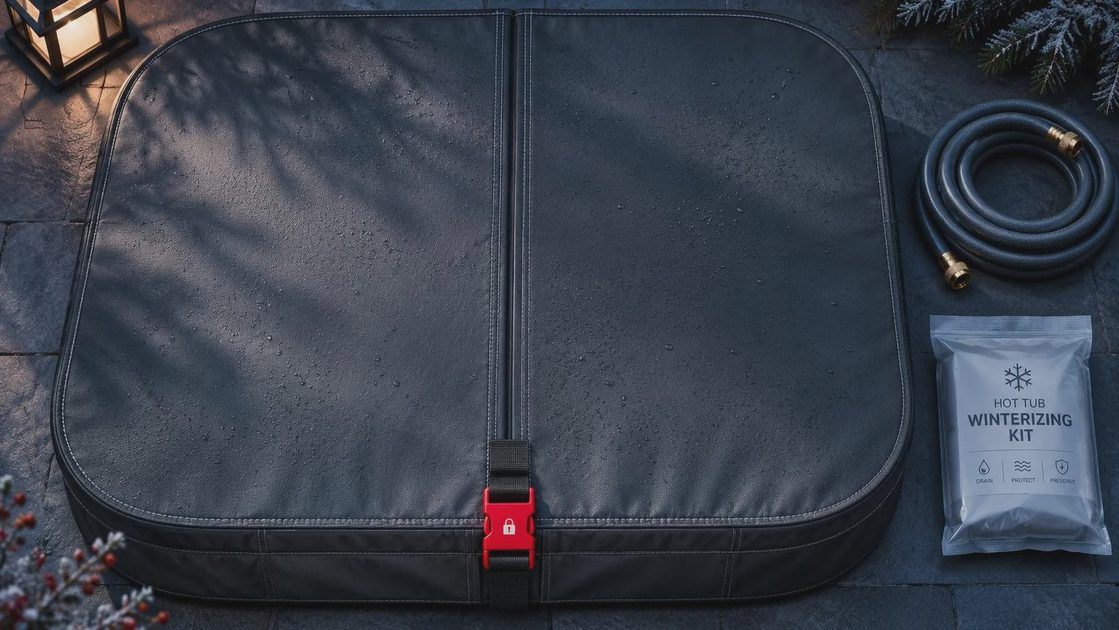
Once the water is out, the shell should be dry and free of leaves, standing water, and chemical residue. Leave drain fittings in the position specified by the manual rather than improvising with tape or household plugs. The cabinet should remain ventilated as directed, because sealing damp air inside can create musty insulation and corrosion.
The cover is not decoration; it is the first defense against snow, rain, and debris. Inspect the foam core for sagging, the vinyl for splits, and the straps for secure attachment. A waterlogged cover can weigh several hundred pounds and place stress on the tub hinge and cabinet. Replace a cover that no longer sheds water, particularly before a wet snow event.
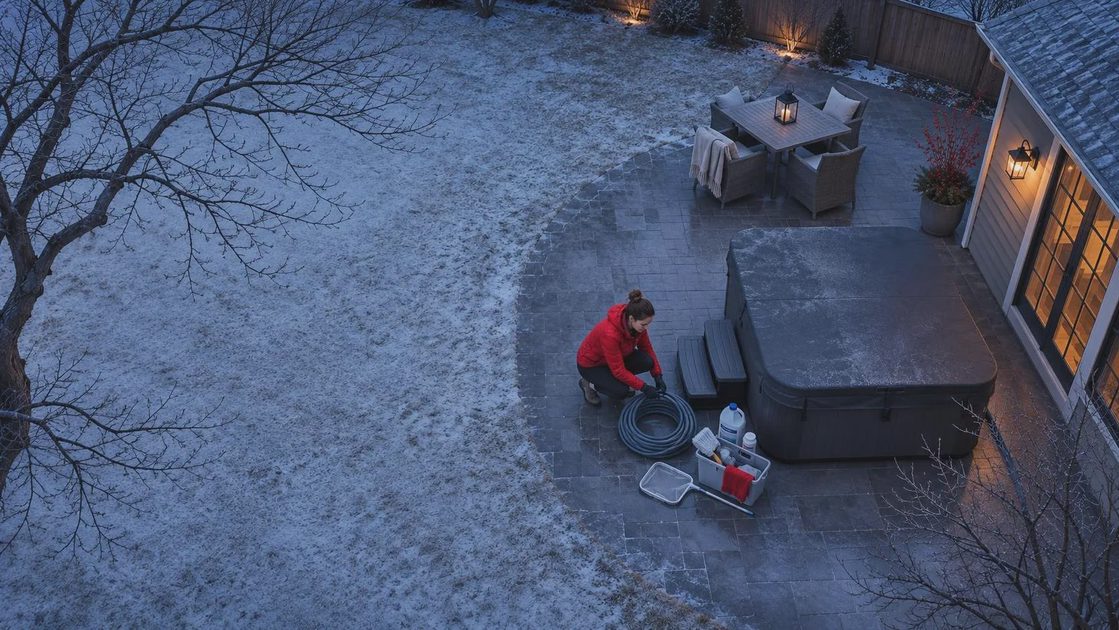
How to winterize a hot tub also includes protecting the area around it. Trim branches that could drop onto the cover, secure the cover against wind, and make sure runoff cannot collect beneath the equipment side. If the tub sits on a deck, look below it for staining or soft framing. The spa itself can weigh more than two tons when full, so a deck concern deserves an inspection before the next season, not after a failure.
Know when DIY stops being sensible
Draining the visible water is not the same as winterizing the plumbing. Call a qualified spa technician when the manual is missing, the tub has multiple jets with complicated plumbing, the pump will not drain, or you find water near electrical components. A typical seasonal service may cost roughly $150 to $400, depending on access, region, and the amount of line clearing required. That is a reasonable price compared with a cracked heater, split pump housing, or flooded equipment bay.
You should also bring in help if the tub is built into a deck, located inside an enclosed room, or connected to a dedicated electrical panel you do not understand. Do not guess at breaker identification. A licensed electrician can verify shutdown and inspect unsafe wiring, while a spa technician handles the water system. These are different jobs, and combining them into one improvised repair is how small maintenance turns into a larger claim.
Check it after the first serious freeze
Winterization is not a one-and-done task. After the first major storm, inspect the cover, straps, ground, and cabinet exterior without opening electrical compartments. Look for a sagging cover, fresh water around the base, ice buildup that could shift the shell, or a cover that has blown partly open. Brush off heavy snow according to the cover manufacturer’s guidance rather than piling more weight on the hinge.
If the tub remains operational instead of drained, check it after a power outage and confirm that the water level has not fallen below the manufacturer’s minimum. A frozen hose bib, tripped breaker, or silent circulation pump deserves attention the same day. Waiting until spring can allow repeated freeze-and-thaw cycles to enlarge a crack.
The short version of how to winterize a hot tub is this: choose drain or maintain, find leaks first, remove water from every vulnerable component, secure the cover, and arrange professional help when the plumbing or electrical system is unclear. A ten-minute check today saves a ten-thousand-dollar call tomorrow. Now go walk around your tub; you have ten minutes.

No comments yet.