
If you are learning how to winterize a pool, the important question is not simply whether the water looks clean. The real question is whether freezing water can sit inside the plumbing, pump, filter, heater, or other equipment for several months. I used to write checks for this. Now I write about it so you do not need the check. A ten-minute check today saves a ten-thousand-dollar call tomorrow.
Why pool winterization matters
Water expands when it freezes. In an open pool, that expansion is usually manageable because the water has room to move. Inside a sealed pipe, pump housing, filter tank, or heater manifold, it can split plastic and damage fittings. The break may remain invisible until spring, when the system is restarted and hundreds of gallons begin draining into the equipment pad or surrounding soil.
One claim I remember involved a homeowner who had closed the pool correctly except for a low section of return plumbing. The lines looked dry at the equipment pad, so nobody thought twice about them. In spring, the pump ran for less than a minute before water began disappearing. The repair involved locating the underground leak, replacing damaged pipe, and repairing a section of the concrete pad. The final bill was roughly $2,700, not counting the lost weekend and several weeks without a usable pool.
Winterization is especially important in areas where temperatures stay below freezing overnight, including much of the Midwest, Northeast, Mountain West, and higher elevations. In warmer parts of the South, a full seasonal closing may not be necessary, but a sudden freeze can still damage exposed equipment. The right plan depends on your climate, pool design, and whether the system can circulate during cold snaps.
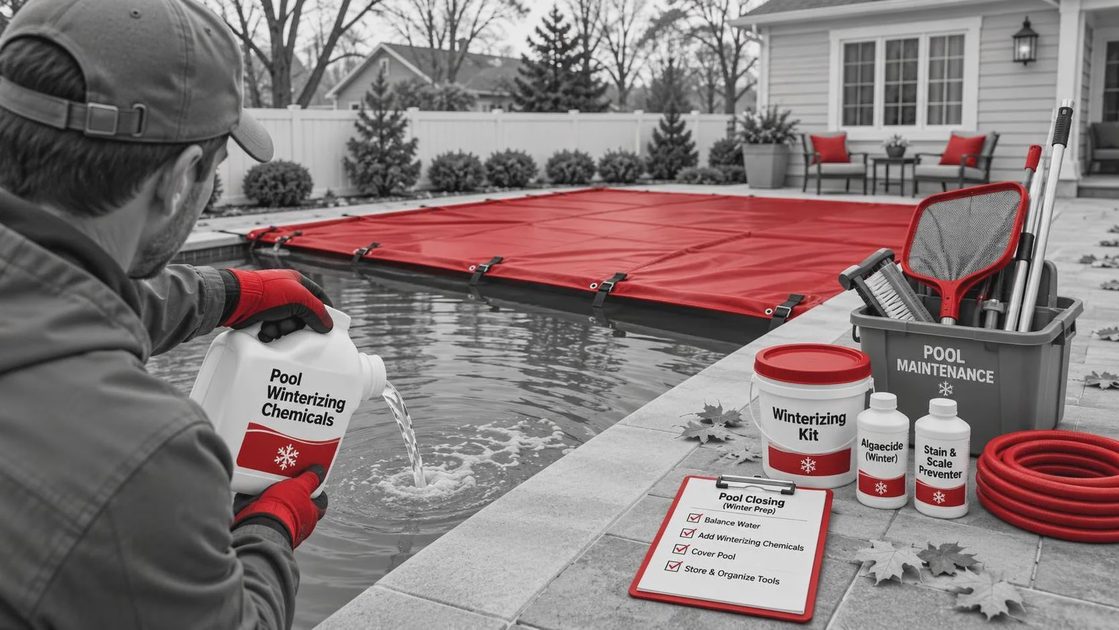
How to winterize a pool: inspect before you close
Before deciding how to winterize a pool, walk the entire system in daylight. Look for wet soil near buried plumbing, mineral deposits around fittings, cracked valve bodies, brittle hoses, and water stains below the pump or filter. A small leak that is easy to overlook in October can become a larger failure when freezing temperatures arrive.
Check the equipment pad after the pump has been off for several hours. A puddle smaller than a dinner plate that dries completely within four hours is usually a monitor-and-recheck issue. A puddle that returns, grows, or remains damp overnight deserves attention before closing. Do not assume a little dripping is harmless; repeated moisture around electrical equipment creates a separate safety concern.
The pool surface also gives you useful information. If the water level has dropped noticeably over a week without evaporation, have the system evaluated before covering it. A winter cover can hide a leak until spring, when the water level is low enough to expose liners, plaster, or coping to damage. Spend the money on leak detection before spending money on a cover replacement.
The parts that deserve the most attention
The pump and filter are common failure points because they hold water in awkward chambers and low spots. A professional closing service generally removes or evacuates water from those components, clears water from the circulation lines, and protects vulnerable openings with appropriate plugs or fittings. I am deliberately not turning this into a repair manual: the exact procedure varies between sand, cartridge, and diatomaceous earth filters, as well as between above-ground and in-ground pools.
The heater deserves its own inspection. Pool heaters contain passages and heat exchangers that can be expensive to replace. A neglected freeze can turn a seasonal maintenance job into a $1,000 to $4,000 equipment repair, depending on the unit and damage. Look for corrosion, previous leaks, or a control panel that has already been unreliable. Winterizing a pool does not make an already failing heater healthy; it only reduces the chance of adding freeze damage.
Inspect the cover, anchors, ladder, handrails, and nearby fencing too. A damaged cover can collect leaves, snow, or standing water and place stress on the pool structure. Loose anchors can become trip hazards. Store removable accessories where rodents and moisture will not damage them. These are not the dramatic parts of closing day, but they are often the parts homeowners discover after weather has already caused trouble.
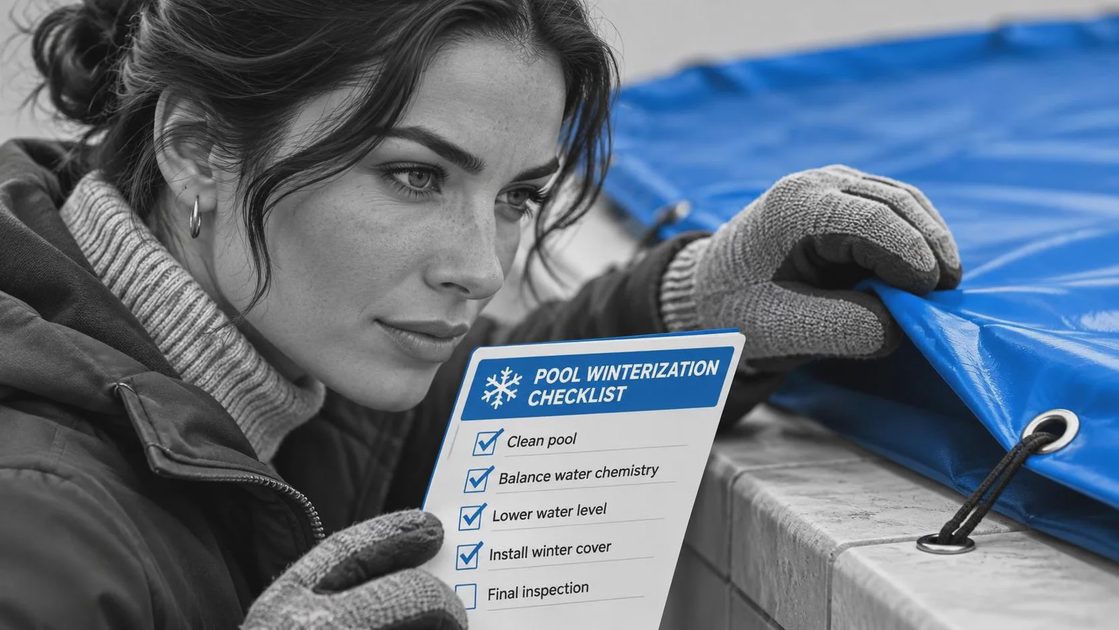
A practical closing checklist
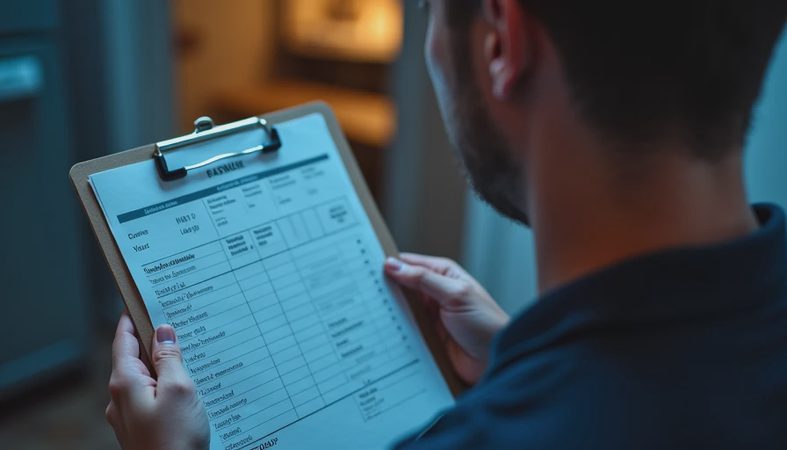
Use this checklist as a decision tool when planning how to winterize a pool:
- Confirm the expected freeze dates for your area and schedule service before the first hard freeze, not after it.
- Record the water level and photograph the equipment pad, valves, heater, and visible plumbing.
- Look for recurring puddles, damp soil, white mineral buildup, cracks, and unexplained water loss.
- Identify whether the pool is in-ground, above-ground, saltwater, or equipped with a heater or automation system.
- Review the owner manuals for the pump, filter, heater, and chlorinator so a service professional knows the installed equipment.
- Have a qualified pool technician close the system if underground plumbing, heaters, complicated automation, or prior leaks are involved.
- Confirm that the cover is properly supported and that no one can access the pool area during the off-season.
- Recheck the equipment after the first freeze and after major snow or ice events.
Do not add random antifreeze, seal openings with household materials, or rely on a pool cover to protect plumbing. Products made for pool systems and procedures approved for the specific equipment matter. If the system is under warranty, incorrect winterization can also create an avoidable dispute over responsibility.
What winterization costs compared with repairs
Basic professional closing commonly costs a few hundred dollars, while more involved service for a large pool, heater, spa combination, or difficult plumbing layout can cost more. That price usually includes an inspection, water balancing, equipment preparation, line protection, and cover installation or inspection. Get the scope in writing because “pool closing” can mean different things from one company to another.
A missed cracked fitting might cost $150 to $400 if found early. A broken pump housing may run $500 to $1,200. Underground plumbing damage, heater failure, or structural damage from a neglected leak can move the bill into the several-thousand-dollar range. Homeowners insurance often does not pay for gradual deterioration or poor maintenance, and coverage for freeze damage depends on the policy and circumstances. Maintenance is the cheaper side of that conversation.
I used to think every winter pool service was an upsell. Field inspections corrected that assumption. If you have a simple above-ground pool in a mild climate and can monitor it reliably, a full-service closing may not be necessary. If you have buried lines, a heater, or a history of leaks, the service is usually a reasonable preventive expense.
When to call someone before closing
Call a pool professional promptly if the water level keeps falling, the pump loses prime, the filter pressure behaves unusually, the heater has visible corrosion, or a valve is cracked or difficult to operate. Also call if you cannot identify how water leaves each section of the circulation system. Guessing is cheap until the first freeze turns uncertainty into a broken component.
If a freeze is forecast within 24 hours and the pool has not been closed, prioritize protecting exposed equipment and getting expert advice rather than rushing through unfamiliar work. In regions with occasional freezes, ask whether the system should be drained, continuously circulated during the event, or maintained with a specific freeze-protection setting. The safest answer depends on the design.
The simplest lesson from how to winterize a pool is that closing day is really inspection day. Find the leak, crack, or weak component while it is visible and accessible. A ten-minute check today saves a ten-thousand-dollar call tomorrow. Now go walk the equipment pad; you have ten minutes.
No comments yet.