You fill a glass at the refrigerator, and the water tastes a little off. Is the filter overdue, or is something else going on? The short answer to when to replace a refrigerator water filter is usually every six months, or sooner if you reach its rated capacity or notice a persistent drop in flow. Follow your refrigerator and filter instructions if they specify a different interval.
A filter reminder is useful, but it is not a water-quality test. And while an overdue filter deserves attention, it is not the same emergency as an active leak behind the refrigerator. Knowing the difference helps you spend your time and money where they matter.
Start with the calendar and capacity
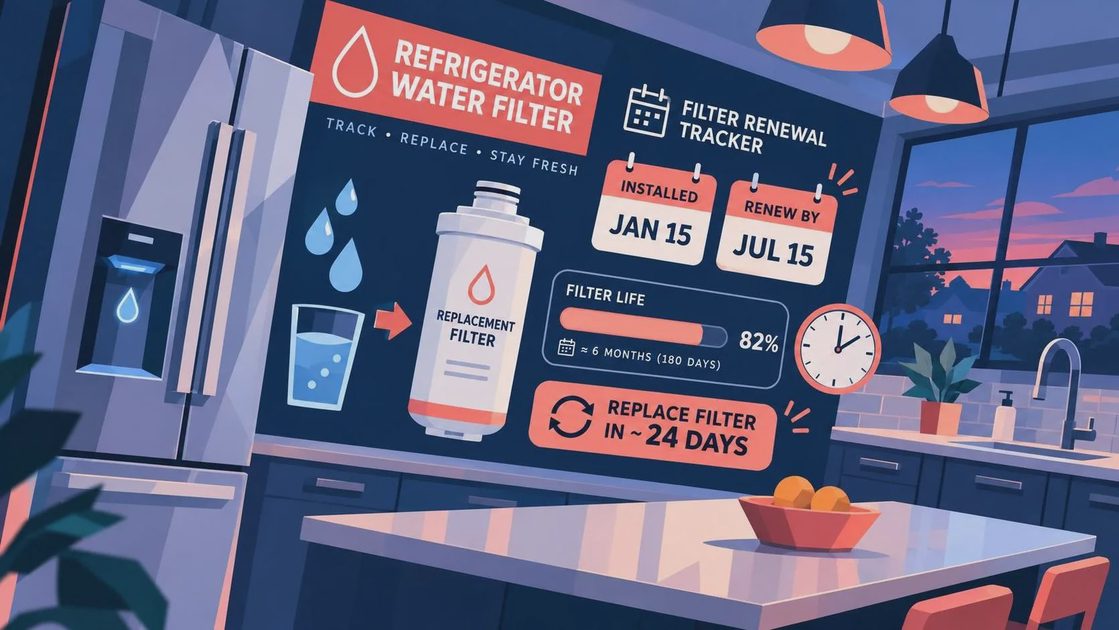
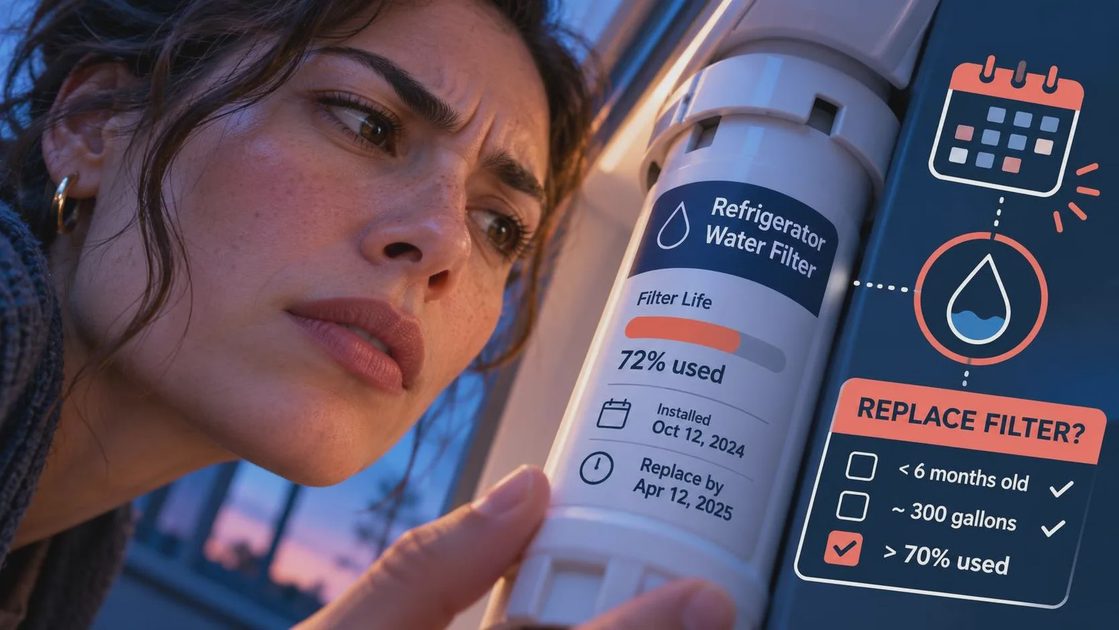
Many refrigerator filters are designed for roughly six months of use. The other limit is the filter's rated capacity, usually printed in gallons on the packaging or product information. Replace it when you reach either limit specified by the manufacturer, even if the water still tastes normal.
A household that fills large water bottles and uses a lot of ice may reach the gallon limit before the six-month mark. A household that rarely uses the dispenser should still follow the time limit; low use does not automatically make an old cartridge good indefinitely.
If you do not know when the filter was last changed, replace it now and record the date. A note on the refrigerator or a calendar reminder is enough. The goal is to avoid guessing the next time someone asks why the ice tastes strange.
The indicator light can help, but check the owner's manual for what triggers it and how it is reset. Some reminders track elapsed time or estimated usage rather than measuring how much contaminant the filter is removing. Resetting a light without replacing the cartridge does not restore its filtering capacity.
Signs it may need replacing sooner
A noticeable change in taste or odor can be a reason to replace an aging filter early. So can a dispenser that has gradually slowed or an ice maker that produces less ice than usual. Sediment and other material can restrict flow, and filters have a finite capacity.
Those signs are clues, not a diagnosis. Slow water can also point to a kinked supply line, a closed or partly closed valve, low water pressure, or a problem elsewhere in the refrigerator. If a correctly installed new filter does not improve the flow, consult the appliance manual or arrange a service visit rather than buying a second cartridge.
Cloudy water immediately after a filter change can be caused by air in the water. Follow the manufacturer's flushing instructions and see whether it clears. Water that remains discolored, smells unusual throughout the house, or changes suddenly at multiple faucets deserves a broader look: contact your water utility or a qualified water professional.
One important distinction: clear, good-tasting water is not proof that the filter is working or that the water is safe. Many contaminants cannot be detected by taste or smell. Use the replacement schedule and the filter's certified claims, not your taste buds alone.
When to replace a refrigerator water filter after a water advisory
A routine cartridge is not a substitute for following a boil-water notice or other instructions from your water utility. Refrigerator dispensers and ice makers generally should not be assumed to make unsafe water safe, and freezing does not reliably disinfect it.
During an advisory, use an approved safe water source for drinking and ice as directed by your utility. Once the notice is lifted, follow the utility's and refrigerator manufacturer's guidance for flushing the system, handling stored ice, and replacing the filter. Requirements depend on the situation and equipment.
A burst water main, nearby construction, or a well problem can also introduce sediment or change water quality. If the dispenser slows after such an event, the filter may have loaded up early. But if water is discolored throughout the house, address the supply issue rather than treating the refrigerator as the source.
Choose a replacement that actually fits
Use the refrigerator's model number and the manufacturer's compatibility information to identify the right cartridge. Similar-looking filters are not necessarily interchangeable. Check the exact part number, especially when a listing says a filter fits a broad range of appliances.
Look for independent certification to the relevant NSF/ANSI standard and verify the specific contaminants the filter is certified to reduce. Certification for one claim does not mean the filter removes every contaminant. The package or certification listing should spell out the tested claims and rated capacity.
Buy from a seller you trust, and be cautious of unusually cheap listings or packaging that looks inconsistent with the manufacturer's information. A counterfeit or incompatible cartridge can be hard to judge by appearance alone. If you have a private well or a known water-quality concern, consider testing the water and selecting treatment for the actual problem; a refrigerator filter may not be enough.
Replacement cartridge costs vary by model and seller. Compare the cost over a year, not just the price of one filter, and account for how often your household reaches its capacity. There is no need to replace a properly functioning cartridge every month unless its instructions or your water conditions call for it.
Check for leaks separately
An old filter does not automatically mean your refrigerator is about to flood. The damage concern is water escaping from the filter housing, a connection, or the supply line and staying unnoticed. That is a separate issue from whether the cartridge is still filtering well.
After a replacement, check the filter area for drips and look at the floor around and beneath the refrigerator. A small amount of water from the change may be incidental; fresh moisture that returns after being dried is not. If water is actively leaking, stop using the dispenser and ice maker, shut off the refrigerator's water supply if you can do so safely, and arrange service promptly.
If the floor feels soft, the adjacent cabinet is swollen, or you find repeated moisture, do not wait for the next filter reminder. Have the source and any hidden damage assessed. Insurance coverage for resulting damage varies by policy and circumstances, and the failed part or long-term seepage may not be covered.
Today, check the filter date and take one minute to look for fresh moisture around the refrigerator.
No comments yet.