
You are standing in the basement after a hard rain. The floor is dry, the furnace is quiet, and nothing looks urgent. You decide to check the gutters next weekend. That small delay is how the true cost of deferred maintenance begins. I used to write checks for this as a claims adjuster. Now I inspect homes and see the same pattern: a minor defect sits unnoticed, then turns into a repair measured in thousands rather than hundreds.
What deferred maintenance really means
Deferred maintenance is not skipping a luxury upgrade or postponing a kitchen remodel. It is ignoring a known condition that protects, supports, or drains your house. A loose gutter, stained ceiling, slow toilet leak, cracked caulk joint, noisy furnace, or missing roof shingle can all qualify. The important word is known. If you have seen the warning and choose to wait, the clock is already running.
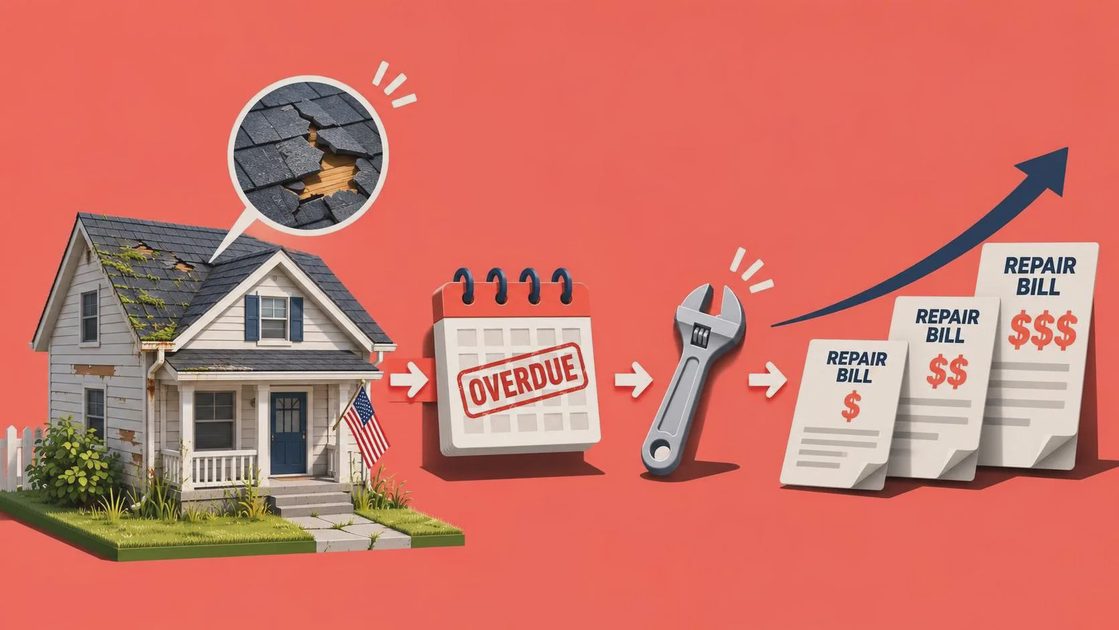
The true cost of deferred maintenance has three parts. First comes the original repair, such as replacing a failed toilet seal for $150 to $300. Then comes the damage the failure creates: wet subfloor, swollen trim, damaged drywall, or mold cleanup. Finally, there is disruption. A bathroom that cannot be used for two weeks costs more than the contractor invoice when it affects work, school, and daily life.
This does not mean every flaw deserves an emergency call. A hairline drywall crack that stays the same size is usually a monitoring item. A ceiling stain that grows after every storm is not. The decision depends on whether water, heat, electricity, structure, or indoor air quality is involved.
The small leak that becomes a large claim
Case file from my adjusting days: a homeowner noticed a faint brown ring below an upstairs bathroom. The stain dried, so the ceiling was painted. Eight months later, the toilet supply connection failed completely. Water ran through the floor, ceiling, and hallway wall before anyone noticed. The final repair was about $8,600, including flooring, drywall, cabinetry, drying equipment, and repainting. The original warning could have been evaluated for the price of a service call.
That is a common progression. Water rarely announces itself at the point of damage. It travels along framing, insulation, and subfloor seams. By the time paint bubbles or a baseboard swells, the visible symptom may be several feet from the source. A musty smell, soft flooring, recurring stain, or damp cabinet bottom deserves attention even when there is no active puddle.
Use practical thresholds. If a stain is smaller than a dinner plate, has not changed in a month, and the area is dry, schedule an inspection or qualified trade visit rather than panicking. If it expands, feels soft, smells musty, or appears after each rainfall, make the call this week. The true cost of deferred maintenance rises sharply when moisture stays hidden.
Roofs, gutters, and foundations work as one system
Homeowners often treat the roof, gutters, downspouts, grading, and foundation as separate chores. They are one water-management system. A clogged gutter spills against siding. A short downspout deposits that water near the foundation. Poor grading holds it there. Over time, water can stain basement walls, damage insulation, erode soil, and contribute to cracking.
A gutter cleaning may cost roughly $150 to $350 for a typical home, depending on height and access. Replacing damaged fascia can run $500 to $2,000. Basement water mitigation, drainage work, and interior restoration can quickly reach $5,000 to $15,000. Foundation repair is a separate question, and not every crack indicates structural movement. A crack wider than a credit card, one that changes, or one accompanied by sticking doors and uneven floors deserves professional evaluation.
Look outside after a storm, not only on a sunny Saturday. Watch where water leaves the downspouts and whether it collects beside the house. You are not trying to diagnose the foundation. You are deciding whether the water has a clear path away from it. That ten-minute observation often exposes the true cost of deferred maintenance before the basement does.
Heating, cooling, and electrical warning signs
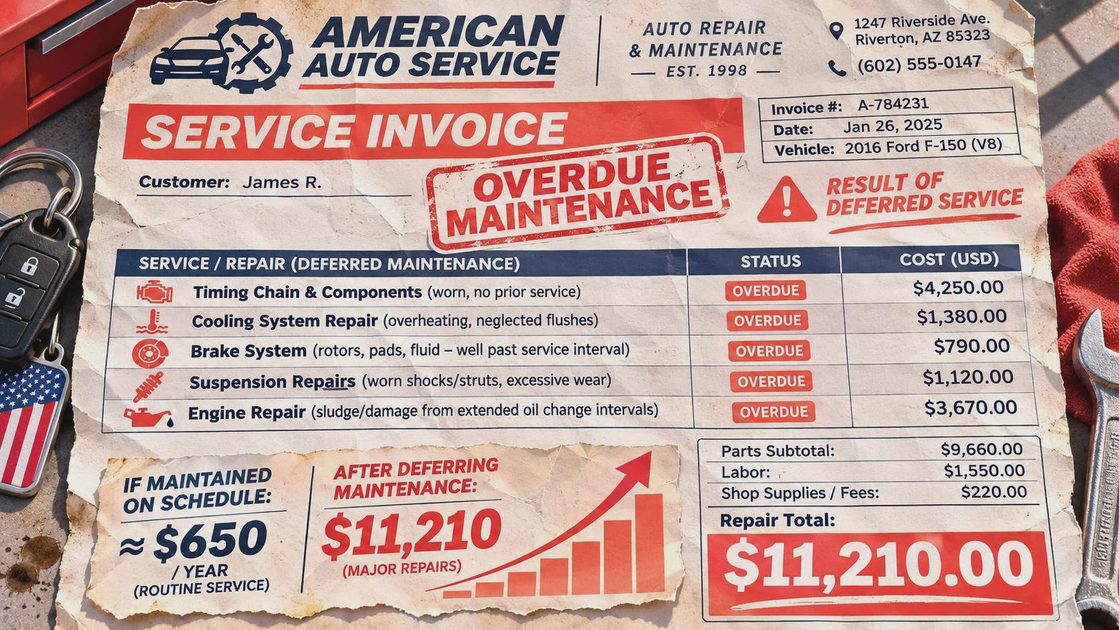
Mechanical systems usually offer clues before they fail. A furnace that cycles constantly, produces unusual smells, or struggles to heat one room needs attention. An air conditioner that runs for hours while indoor temperatures rise may have an airflow, refrigerant, or equipment problem. Annual professional service is not a guarantee against failure, but it can identify dirty components, unsafe operation, and aging parts before the worst day of the season.
A basic service visit might cost $100 to $250. A repair can range from $200 for a common component to more than $1,000 for a major part. Replacement of a central HVAC system commonly lands in the several-thousand-dollar range. The best financial decision is not always replacing early; sometimes a $300 repair on a well-maintained system is sensible. The useful question is whether the equipment is safe, reliable, and economically reasonable for its age.
Electrical warning signs deserve a lower tolerance for delay. Warm outlets, burning odors, buzzing, repeated breaker trips, and flickering lights should be evaluated promptly. Do not remove covers or attempt repairs based on an online video. The true cost of deferred maintenance can include fire damage, not just a service invoice, and homeowners insurance generally does not cover damage caused by neglect or poor maintenance.
What insurance usually does and does not change
Homeowners insurance is designed primarily for sudden and accidental covered damage, not routine deterioration. A sudden pipe burst may be covered under many policies, while the failed pipe itself, long-term seepage, rot, or mold connected to neglect may be excluded or limited. Coverage also depends on the policy, the cause of loss, endorsements, and the facts documented during the claim.
That distinction matters because some homeowners wait for insurance to make maintenance affordable. It is a risky strategy. A carrier may pay for resulting water damage from a covered event while declining the cost of replacing an old, corroded fixture that should have been maintained. Your deductible still applies, and a claim can create paperwork and disruption even when the covered portion is modest.
Keep photographs of recurring stains, service invoices, roof inspections, and major system evaluations. Records do not turn excluded wear into covered damage, but they show that you noticed conditions and acted responsibly. If damage is active, stop the source only if it is safe to do so, document the scene, and contact the appropriate professional.
A simple order for spending your maintenance budget
When money is tight, rank work by consequence rather than convenience. First address conditions involving active water, gas, fire risk, structural movement, or unsafe heating. Next handle defects that can spread, such as roof openings, gutter discharge against the foundation, soft flooring, or recurring plumbing leaks. After that, schedule efficiency and lifespan work, including HVAC service, exterior caulking, and inspections of older systems.
A useful annual reserve for routine maintenance is often around 1% to 2% of a home's value, though older homes and harsh climates can require more. You do not need to spend that amount blindly. Use it to fund inspections, cleanings, minor repairs, and eventual replacements. A $250 evaluation that confirms a problem is stable can be money well spent; a $5,000 project to prevent a $200 nuisance is not automatically wise.
Write down the issue, location, date noticed, recent change, and likely consequence. Take a photo with a ruler or familiar object for scale. Then obtain a clear opinion and price before the condition worsens. This turns vague worry into a manageable decision.
The ten-minute check to do today
Walk the exterior and basement with your phone. Look at ceiling stains, exposed pipes, the water heater area, furnace condensate, foundation walls, gutters, downspouts, and the floor around toilets. Listen for running water when every fixture is off. Notice odors, dampness, new cracks, and anything that has changed since last month.
Do not try to fix what you cannot safely evaluate. Mark each finding as stable, needs a scheduled professional visit, or needs prompt attention. That small list is more valuable than a perfect maintenance calendar because it reflects your actual house.
The true cost of deferred maintenance is not just the final repair bill; it is the damage, disruption, and lost options created by waiting. A ten-minute check today saves a ten-thousand-dollar call tomorrow. Now go walk your basement. You have ten minutes.


No comments yet.