You are standing in the basement after a hard rain. The floor is dry, the furnace sounds normal, and the house appears fine. That is when most homeowners stop looking. After eight years reading property claims, I learned that the expensive problems usually start somewhere less dramatic: a gutter overflowing behind the siding, a toilet seal sweating into the subfloor, or a roof leak that only appears when wind pushes rain sideways. Understanding home maintenance cost is less about spending constantly and more about knowing which small checks deserve your attention.
A reasonable planning number for a typical single-family home is about 1% to 2% of the home's value per year. A $350,000 house might therefore justify a reserve of $3,500 to $7,000 annually, although the actual amount changes with age, size, climate, and deferred work. That money is not all spent every year. Some years it covers a $180 furnace service and gutter cleaning; another year it pays for a $9,000 roof replacement. The reserve keeps one bad month from becoming a credit-card emergency.
What the annual maintenance budget really covers
Home maintenance cost has three layers. The first is routine work: furnace and air-conditioning service, pest inspections, chimney checks where applicable, gutter cleaning, tree trimming, and minor caulking. Many homeowners spend roughly $500 to $1,500 a year on this category, depending on how much they hire out. These are the boring expenses that keep water, heat, and pests from finding an opening.
The second layer is replacement planning. Asphalt shingles commonly last around 15 to 30 years, water heaters often serve 8 to 12 years, and HVAC equipment frequently reaches 12 to 20 years with normal care. Those ranges are not promises. A cheap water heater installed in a hard-water area can fail earlier, while a well-maintained system may run longer. If a $1,500 water heater is already ten years old, setting aside $15 to $25 monthly is more useful than acting surprised when it finally leaks.
The third layer is the unpleasant surprise: a failed sump pump, frozen pipe, cracked sewer line, or storm-damaged roof. This is where home maintenance cost becomes a cash-flow problem. A plumber may charge $250 to $600 for an urgent visit before repairs. Water extraction and drying can add $1,000 to $5,000, while replacing damaged flooring and drywall can push the bill much higher. Homeowners insurance generally responds to sudden covered events, not gradual deterioration or neglect, so prevention still matters even when you carry a good policy.
The small warning signs with expensive consequences
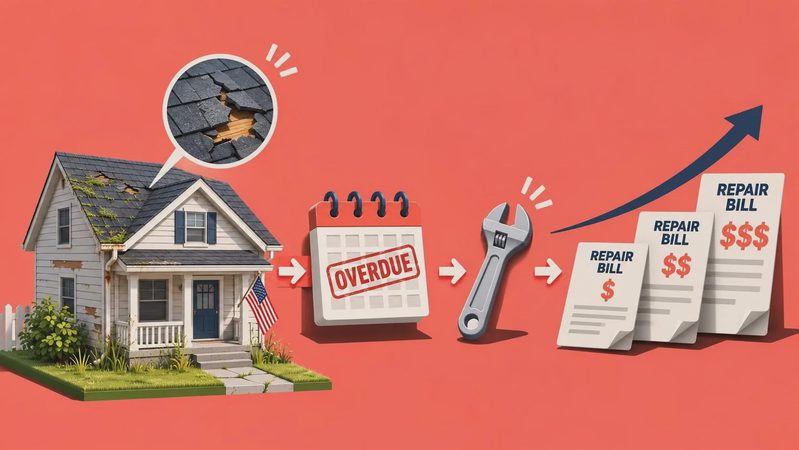
Case file from my claims days: a family noticed a faint brown ring below an upstairs bathroom. It was smaller than a dinner plate, and the ceiling felt dry. They waited through a busy season. Six months later, the toilet supply connection failed, soaking the bathroom floor and the room below. The eventual repair involved subfloor sections, insulation, drywall, paint, and temporary lodging. The original warning would have justified a plumber's $150 to $300 diagnostic visit. The damage cost several thousand dollars.
A ceiling stain that grows after rain deserves attention within days. A musty smell in a basement, especially near a wall or mechanical room, is worth investigating even when no puddle is visible. A toilet that rocks, a water meter that moves while every fixture is off, or a furnace that cycles unusually often should not be filed under “old house behavior.” These symptoms do not always mean catastrophe. They do mean the home maintenance cost of diagnosis is usually smaller than the cost of guessing wrong.
Use practical thresholds. A hairline drywall crack that stays stable and is narrower than a credit card can often wait for a normal inspection. A crack that widens, steps through masonry, admits water, or appears with a sticking door deserves a professional look sooner. A gutter that overflows during one storm may need cleaning; one that repeatedly dumps water beside the foundation needs a drainage conversation, not another bucket.
Where homeowners overspend and underspend
I used to think every preventive upgrade was automatically smart. Field inspections corrected that assumption. Spending $5,000 to solve a $200 cosmetic issue is not good maintenance. Replacing functioning equipment early solely because a salesperson predicts failure may produce a tidy receipt but little protection. Get the diagnosis first, ask what evidence supports the recommendation, and request the consequence of waiting one season.
Homeowners underspend more often on water management. Cleaning gutters may cost $150 to $400, depending on the home and access. Downspout extensions, grading corrections, or a small plumbing repair can cost a few hundred dollars. Ignoring those items can contribute to wet basements, damaged siding, rot, or foundation problems. The right priority is not the newest appliance or a premium finish. It is keeping bulk water outside and identifying leaks before materials stay wet.
The same logic applies to heating and electrical systems. An annual furnace inspection may cost $100 to $200, while an emergency no-heat call can cost several hundred dollars before parts. Do not treat a burning smell, repeated breaker trips, or a warm outlet as a future project. Those are decision points for a qualified professional, because the risk is not merely an inefficient system.

A simple way to set your yearly reserve
Start with the age of the roof, HVAC system, water heater, and major appliances. Write down the likely replacement price for each, then divide by the remaining useful years you reasonably expect. A roof estimated at $12,000 with eight years left suggests $1,500 per year in reserve. Add routine work, tree care, and a buffer for emergency service. That calculation gives a more useful home maintenance cost than copying a generic online percentage.
Climate changes the ledger. Snow country brings roof ice, freeze risks, and furnace demand. Hot, humid regions put more strain on air-conditioning equipment, crawlspaces, and exterior paint. Older homes add plumbing, electrical, and drainage uncertainties. A newer house may require less repair money but still needs inspections because construction defects and warranty deadlines are easier to address early.
Keep the reserve separate from everyday spending if possible. When a water heater fails on a Sunday, having $2,000 available changes the decision. You can choose a qualified replacement instead of accepting the first rushed quote. Get two estimates for planned work, confirm what is included, and ask whether permits or disposal fees are separate. The lowest bid is not always the lowest home maintenance cost if it excludes the work that prevents a repeat failure.
The ten-minute check to do today
Walk outside and look at the roofline, gutters, downspouts, hose connections, and foundation after the next rain. Inside, look under sinks, around toilets, behind the washing machine, and beside the water heater. Listen for running water when every fixture is off. Check the furnace filter condition and note any new smell, sound, or temperature change. You are not repairing anything on this walk; you are deciding what deserves a closer look.
Record photos and dates for stains, cracks, and equipment labels. That simple history helps a contractor identify change and helps you avoid paying for repeated guesswork. It also gives an insurance adjuster a clearer timeline if a sudden covered loss occurs, although documentation does not turn maintenance damage into an insured event.
The most useful home maintenance cost is the one you pay while the problem is still small: a cleaning, inspection, seal replacement, or service call. A ten-minute check today saves a ten-thousand-dollar call tomorrow. Now go walk your basement. You have ten minutes.

No comments yet.