Your air conditioner quits on a 95-degree Saturday, or your furnace starts making a metallic rattle the week before a snowstorm. The first question is usually the cost of replacing hvac vs repairing. I used to write checks for the damage that followed neglected home systems. Now I write about the decision so you can make it before a minor failure becomes an emergency appointment.
The honest answer depends on the equipment's age, the failed part, efficiency, refrigerant, and what else is wearing out. A $350 repair on a six-year-old furnace can be sensible. The same bill on a 19-year-old system may be money spent postponing a $6,000 to $12,000 replacement.
Start with the age and condition of the system
A typical central air conditioner lasts roughly 12 to 15 years. A gas furnace often reaches 15 to 20 years when it has been maintained, although harsh operating conditions and poor installation shorten that range. Heat pumps commonly fall in the 10-to-15-year range, depending on climate and use.
Age is not an automatic replacement order. I have inspected 17-year-old furnaces with clean heat exchangers, stable operation, and careful service records. I have also seen eight-year-old systems with chronic drainage problems, undersized ductwork, and compressor trouble. For the cost of replacing hvac vs repairing, condition matters as much as the date on the equipment tag.
Look for the pattern rather than one dramatic symptom. Has the system needed two repairs in the past 24 months? Are rooms becoming harder to heat or cool? Is the outdoor unit loud, rusty, or frequently tripping the breaker? A single failed capacitor is different from a compressor that is drawing abnormal current and leaking refrigerant.

What repairs usually cost
Common HVAC repairs fall into very different price categories. A service call and diagnostic visit may run $100 to $250. A capacitor, contactor, fuse, or basic electrical component may bring the total to $200 to $600. Blower motor repairs often land around $500 to $1,200, while a furnace control board can cost $400 to $900 installed.
Refrigerant leaks are where homeowners often get surprised. Finding and repairing a small leak may cost $400 to $1,500, and refrigerant charges add to the bill. A failed compressor can cost $1,500 to $3,500, sometimes more depending on access and equipment. At that point, the cost of replacing hvac vs repairing starts to favor replacement, especially when the unit is near the end of its expected life.
Do not approve a major repair from a vague description such as “the system is old.” Ask for the failed component, the testing performed, the repair warranty, and whether another major part is likely to remain at risk. You are paying for a diagnosis, not a guess.
What replacement usually costs
Replacing a central air conditioner alone often costs about $4,000 to $8,000 for a standard home, while a furnace replacement commonly falls between $3,000 and $7,000. A matched furnace-and-air-conditioner system can run approximately $7,000 to $14,000. Heat pump installations often range from $6,000 to $15,000, with duct changes, electrical work, permits, and regional labor affecting the final number.
Those are planning ranges, not quotes. A tight attic, difficult roof access, new refrigerant requirements, or a required electrical upgrade can add thousands. So can choosing higher efficiency equipment. The lowest bid is not automatically the best value if it excludes a new line set, drain protection, startup testing, or proper sizing.
When comparing the cost of replacing hvac vs repairing, request at least two written replacement estimates. Each should identify equipment capacity, efficiency rating, included labor, warranty terms, disposal, permits, and any duct modifications. If two contractors recommend dramatically different system sizes, pause before signing.
The 50 percent rule is useful, but incomplete
A simple starting point is to compare the repair with the remaining useful life. If a $400 repair gives a 10-year-old system several more seasons, that can be reasonable. If a $2,800 compressor repair goes into a 16-year-old air conditioner that already has a refrigerant leak, replacement deserves serious consideration.
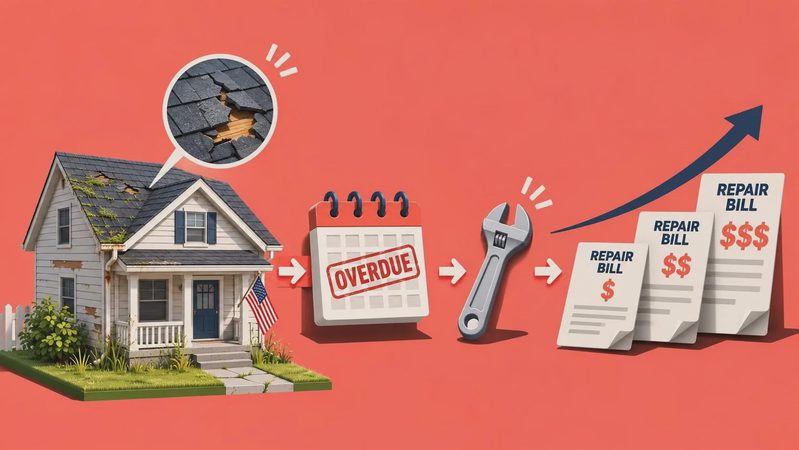
I use a rough threshold: when a repair approaches half the cost of a comparable new system, replacement becomes the stronger option. But this is not a law. A $1,500 repair on a $10,000 replacement may be worthwhile if the equipment is sound and parts are available. A $700 repair on a neglected, corroded system may only be the first bill in a chain.
Think of it like trail running shoes. Replacing one worn lace is sensible. Replacing the sole, heel counter, and upper one month at a time means you are rebuilding a shoe that has already done its miles. The cost of replacing hvac vs repairing is really a question about the next five years, not just today's invoice.

Warning signs that should not wait
Some symptoms justify a prompt professional evaluation regardless of age. A furnace that produces a burning electrical smell, repeatedly shuts down, or triggers a carbon monoxide alarm needs attention immediately. Leave the home and contact emergency services if a carbon monoxide alarm sounds; do not treat it as an HVAC inconvenience.
For cooling equipment, water around the indoor unit, ice covering the refrigerant line, repeated breaker trips, or a compressor that will not start deserves a same-day or next-day call. A small condensate overflow can damage ceilings, drywall, and flooring. Homeowners insurance generally does not pay to replace an old system that failed from wear and tear, and it may not cover the resulting damage if poor maintenance contributed.
Case file from my claims years: a homeowner ignored a slow condensate drip because the system still cooled the house. Three months later, the overflow had damaged a ceiling, insulation, and part of the hallway flooring. The HVAC repair was under $600. The broader cleanup was several thousand dollars, and coverage questions became much harder than they needed to be.
How to compare the two choices this week
First, find the manufacture date, model number, and service history. Take photographs of the data plates, indoor cabinet, outdoor unit, and any visible water staining. Second, get a diagnosis in writing, including the failed part and whether the technician tested related components. Third, request a repair price and a replacement estimate, even if you prefer repair.
Then ask four practical questions: How much energy is the current system likely wasting? Is the refrigerant type still readily available? Are replacement parts easy to source? What additional work will the new installation require? The cost of replacing hvac vs repairing becomes clearer when the quote includes operating costs and future reliability, not just the first payment.
Also check financing carefully. A low monthly payment can hide a long term and substantial interest. If replacement is necessary, compare total project cost, warranty coverage, and expected service life. A modest repair may buy time to build a replacement fund, which is a valid decision when the system is safe and stable.
My practical decision line
Repair is usually sensible when the system is under 10 years old, the failed component is isolated, maintenance records are decent, and the repair is less than roughly 20 percent of replacement cost. Replacement deserves priority when the unit is near its expected lifespan, repairs are recurring, efficiency is poor, or the estimate involves a compressor, heat exchanger, or several expensive parts.
Do not wait for the first hot week or freezing night to make this decision. Contractors are busiest then, emergency rates can rise, and your choices narrow. A spring or fall inspection gives you time to compare estimates without a family sitting under blankets or sleeping beside a window fan.
The cost of replacing hvac vs repairing is not just the number on today's invoice. It includes comfort, reliability, energy use, water damage risk, and the likelihood of another failure next season. A ten-minute check today saves a ten-thousand-dollar call tomorrow. Find your equipment age and schedule a written evaluation before the next weather extreme.

No comments yet.