You are standing in the basement after a heavy rain. The floor is dry, the ceiling looks clean, and you think the inspection went well. I used to write checks for problems like this. Now I write about them so you do not need the check. The things home inspectors miss are usually not dramatic defects. They are hidden, intermittent, inaccessible, or simply outside the limited scope of a standard inspection.
A home inspection is valuable, but it is not a guarantee that every component will work perfectly for the next ten years. Inspectors generally report visible conditions on the inspection date. They do not open finished walls, dismantle appliances, move every piece of stored furniture, or predict what happens during the next storm. That distinction matters when you are buying a house or trying to understand an older one.
What a standard inspection does not see
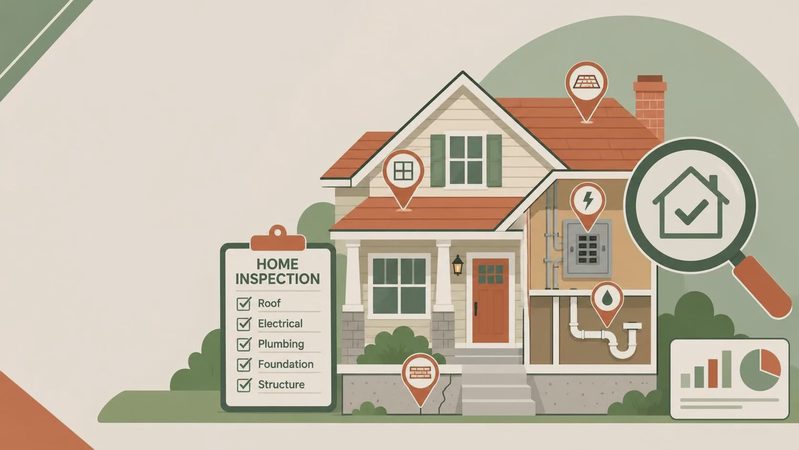
The first category of things home inspectors miss is anything concealed behind finishes. A wall can hide a slow plumbing leak, an improperly supported drain, or old wiring that only becomes hot under a heavy load. The inspector may notice a stain, an unusual odor, or a warm outlet, but the underlying condition often requires a licensed plumber or electrician to investigate further.
Attics and crawlspaces create another blind spot. Low clearance, insulation, standing water, pests, and unsafe access can prevent a complete visual review. In one claim file I remember, a buyer had a clean-looking attic report, but a narrow rear section was never reached. A disconnected bathroom exhaust duct was dumping damp air into that space. The eventual repair involved damaged insulation, limited mold treatment, and ceiling repairs totaling about $3,400.
Inspection reports also commonly exclude septic systems, wells, buried oil tanks, underground drainage, and private sewer lines unless separate inspections are ordered. Those systems can cost anywhere from a few hundred dollars to more than $15,000 when they fail. A general inspection is not bad because it has limits; it is bad only when buyers assume those limits do not exist.

Roof details that look fine from the ground
Roof coverings get plenty of attention, but some of the things home inspectors miss are located at the edges, penetrations, and transitions. A roof can have serviceable shingles while flashing around a chimney, skylight, dormer, or plumbing vent is deteriorating. From the driveway, the roof may look perfectly ordinary. From the roof surface, a small gap or lifted piece of metal can explain a ceiling stain that appears only during wind-driven rain.
I once reviewed a claim involving a two-year-old roof that had been inspected before the purchase. The shingles were not the problem. An improperly sealed plumbing vent allowed water into the attic during heavy rain, then into the insulation and hallway ceiling. The visible damage was roughly $1,900, but the homeowner also had to repaint and replace part of the ceiling.
Ask whether the roof was walked, viewed from a ladder, or observed from the ground. Those are different levels of information. Look for fresh paint on a ceiling, stained insulation, rust around fasteners, and damp wood after a storm. If a roof is near the end of its expected service life, a dedicated roofing evaluation is often a better use of $150 to $300 than relying on a general visual impression.
Plumbing leaks that only happen sometimes
Intermittent leaks are among the most expensive things home inspectors miss because a dry cabinet proves very little. Supply lines can seep only when a washing machine runs. A shower pan can leak only when someone stands in one corner. A toilet may rock slightly and allow water beneath the flooring without leaving a visible puddle.
Look beneath sinks for swollen cabinet bottoms, dark seams, mineral crust, and a musty smell. Check the ceiling below upstairs bathrooms for faint rings or freshly painted patches. Pay attention to toilets that refill unexpectedly, water meters that move when every fixture is off, and floors that feel soft near tubs or dishwashers.
The dollar range is wide. A replaceable supply hose might mean a $150 service call. A hidden toilet leak can involve $2,000 to $8,000 in subfloor, flooring, and drywall damage. In a claims file, a sweating toilet tank was ignored because the moisture seemed minor. Six months later, the adjoining hardwood had cupped and the subfloor had deteriorated. The final bill was close to $8,600.
Electrical and safety issues behind normal operation
A working light does not prove that the electrical system is safe. Some of the things home inspectors miss include loose connections inside boxes, overloaded circuits, missing junction-box covers, reversed polarity at an outlet, and aluminum wiring repairs that were handled poorly. An inspector may identify a concern, but a qualified electrician is usually needed to determine the risk and correction.
Do not treat a tripping breaker as an annoyance to reset forever. It is a signal that deserves attention. Warm outlets, buzzing switches, scorch marks, flickering lights, and extension cords used as permanent wiring also deserve prompt evaluation. These signs do not mean a fire is imminent, but they are not normal house character either.
Ground-fault circuit interrupter protection is another area worth checking in kitchens, bathrooms, garages, basements, and exterior outlets. Older homes often lack protection where current standards would expect it. A targeted electrical review might cost $200 to $500, while correcting a panel, wiring, or concealed connection can run from $500 to several thousand dollars. That is a sensible place to spend money before closing or after moving in.

Heating, cooling, and ventilation blind spots
Heating and cooling equipment can run during an inspection while still being near failure. A furnace may produce heat but have a cracked heat exchanger, restricted airflow, aging blower motor, or unsafe venting condition that requires specialized testing. An air conditioner may cool the house on a mild day but struggle when outdoor temperatures reach the upper 90s.
These are common things home inspectors miss because performance is measured during a short visit, not across an entire season. Ask for service records and note the equipment age, not just whether air came from the registers. A furnace approaching 15 to 20 years old, or an air conditioner around the 12-to-15-year range, deserves realistic budgeting even if it works today.
A furnace repair might cost $300 to $1,200. Replacement can exceed $5,000, while a central air replacement commonly reaches $4,000 to $10,000 depending on the system and installation. Poor bathroom ventilation also deserves attention. Condensation on windows, peeling paint, or a damp attic near a bathroom can indicate that moist air is not leaving the house properly.
How to follow up without wasting money
The answer to things home inspectors miss is not ordering every specialist inspection automatically. Start with the report, then rank findings by water, fire, structural movement, health, and replacement cost. A cosmetic defect can wait. Active moisture, unsafe electrical conditions, structural cracks, and failed heating equipment deserve faster attention.
Ask focused questions: Was the attic fully accessible? Was the roof walked? Were all plumbing fixtures operated? Was the sewer line inspected? Were heating and cooling systems tested under normal conditions? The answers tell you where uncertainty remains. For a $400 sewer scope or $250 roof evaluation, the cost is small compared with discovering a $12,000 problem after closing.
Do not confuse a clean report with a maintenance plan. Keep receipts, photograph questionable areas, and revisit them after heavy rain, a freeze, or the first major heat wave. If a concern is outside the inspector's scope, get the right trade involved rather than asking a generalist to guess.
A ten-minute check today saves a ten-thousand-dollar call tomorrow. Walk your basement, look under the sinks, scan the attic access, and write down anything wet, warm, cracked, or newly painted. Those small observations are often where the expensive story begins—and where you can still change the ending.

No comments yet.