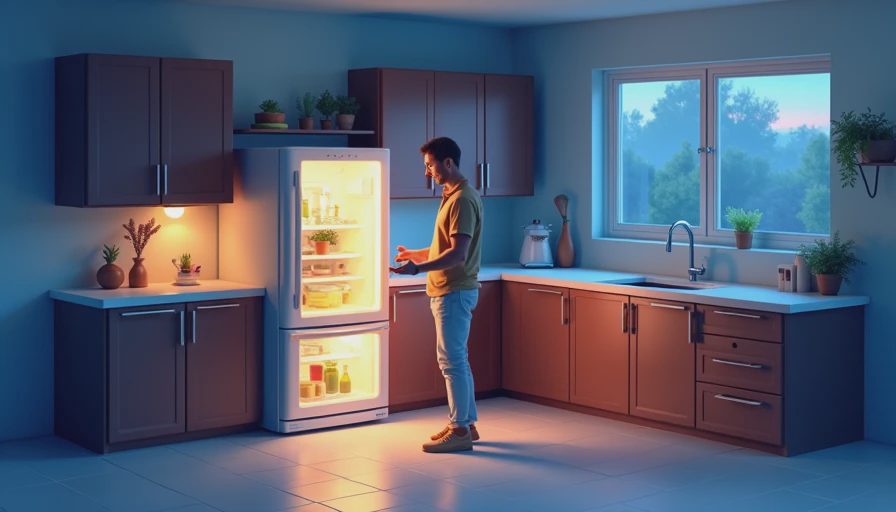
You are standing in the kitchen at 6 a.m., coffee in hand, and the refrigerator is making a sound that was not there yesterday. The milk is still cold, so you close the door and move on. If you have wondered how long do refrigerators last, the practical answer is usually 10 to 15 years, but the condition of the appliance matters more than the number on the purchase receipt. I used to write checks for water and property damage claims. Now I write about the small signs that help you avoid needing one.
The realistic refrigerator lifespan
Most standard refrigerators last about 10 to 15 years. Basic top-freezer models can sometimes run longer because they have fewer electronic controls and mechanical features. French-door models with ice makers, water dispensers, multiple temperature zones, and touchscreens have more components that can fail. That does not make them a bad purchase; it gives you more failure points to watch.
A refrigerator used by two adults in a dry, clean kitchen has a different workload from one serving a family of five in a hot garage. Every door opening lets warm air inside. A condenser covered in dust works harder. A unit that sits beside a range or receives afternoon sun also runs more often. In Colorado, I see plenty of 18-year-old top-freezer refrigerators still operating, while some heavily used premium models need major repairs before year 10.
The better question is not only how long do refrigerators last, but how much useful service remains in yours. A 12-year-old appliance with stable temperatures and no leaks may be fine. A 7-year-old unit with a failing compressor and repeated water problems deserves a serious replacement conversation.

Warning signs worth checking now
Temperature changes are the first signal I take seriously. Food should stay consistently cold, and the freezer should keep items solid without excessive frost. If milk spoils early, ice cream becomes unusually soft, or the refrigerator cycles almost constantly, schedule an appliance evaluation rather than guessing.
Listen for changes, not ordinary operating noise. A brief hum is normal. A repeated clicking sound, loud buzzing, grinding, or a compressor that starts and stops every few minutes points to a problem. Water under the crisper drawers or on the floor is another reason to act quickly. A blocked or cracked drain, failed water line, or defrost issue can damage flooring and cabinets before the appliance stops cooling.
Look inside and behind the unit without attempting a repair. Heavy dust, oily residue, a hot cabinet side, damaged flooring, or a persistent burning smell all move the issue up the priority list. If the smell is electrical or the outlet is warm, unplugging the appliance and calling a qualified professional is more important than saving the groceries.
Repair or replace: the money decision
Repair prices vary by model and region, but common service calls often land between $150 and $400 before parts. A door gasket, thermostat, fan, or drain issue can be financially sensible on a newer refrigerator. Ice maker repairs commonly run from roughly $150 to $350. A compressor replacement can reach $700 to $1,200, and sealed-system work may cost even more.
A new refrigerator commonly costs about $800 to $3,000, with installation, delivery, water-line work, and haul-away potentially adding to the bill. Premium built-in units cost substantially more. If your refrigerator is under eight years old, has a clean service history, and needs a $250 repair, fixing it often beats replacing it. If it is 13 years old and the estimate is $900, replacement usually gives you a cleaner ownership outlook.
I use a simple test: divide the expected repair by the number of reliable years you think the appliance has left. A $300 repair that buys four years is different from a $900 repair on a machine already showing several symptoms. This is the practical answer to how long do refrigerators last: lifespan is a range, not a promise.
How maintenance affects refrigerator life
Maintenance will not make every refrigerator last 25 years, but it can reduce avoidable strain. Keep the condenser area reasonably clean according to the owner’s manual, maintain airflow around the cabinet, and avoid packing shelves so tightly that cold air cannot circulate. Replace a damaged door seal when it no longer closes firmly. A simple dollar-bill test is a useful indication of weak contact, but a service professional should handle repairs.
Keep the temperature controls stable instead of frequently changing them. Store hot leftovers in shallow containers and let them cool appropriately before loading them, following food-safety guidance. Do not ignore a small water puddle because it disappears by lunchtime. Moisture can swell nearby wood, stain flooring, and create conditions for mold beneath an appliance where you cannot see it.
If the refrigerator is in a garage, account for extreme heat and cold. Many household models are not designed for unconditioned spaces, and winter temperatures can affect freezer operation. That environment can shorten service life and create food-storage problems even when the compressor appears to work.
What an insurance claim usually does not solve
Homeowners insurance generally is not a maintenance plan for an aging refrigerator. Normal wear, an old compressor, spoiled food from gradual failure, and poor maintenance are commonly excluded, subject to the policy. Coverage can be different when a covered event, such as a power surge or lightning strike, damages the appliance, but the details depend on the policy, deductible, and cause of loss.
The larger claim risk is often the water line or ice maker connection. A sudden leak can damage flooring, drywall, cabinets, and the room below. One anonymized claim I remember involved a refrigerator supply line that leaked behind a cabinet for weeks. The appliance itself was not the expensive part. Drying, removing flooring, replacing lower cabinets, and repairing the subfloor pushed the loss well above $8,000.
That is why I pay attention to the floor and wall around an appliance, not just whether the food is cold. If you see active water, shut off the supply if you can do so safely and arrange prompt professional help. Do not wait for a refrigerator to fail completely before checking its connections.
A practical replacement timeline
At 10 years, start budgeting rather than panicking. Record the model number, note unusual sounds, and compare a service estimate with current replacement prices. At 12 to 15 years, replacement planning becomes sensible even if the refrigerator still works. You do not need to discard a dependable appliance on its 10th birthday, but you should avoid being surprised by a weekend failure with a full refrigerator and no backup plan.
If cooling is unstable, repairs are recurring, or the unit has caused water damage, move faster. Measure the opening before shopping, confirm the door swing, and check whether the existing water connection is compatible. An inexpensive replacement that does not fit the cabinet opening can become an expensive installation problem.
So, how long do refrigerators last? Expect roughly 10 to 15 years, use condition and repair cost to refine that estimate, and treat leaks or temperature instability as action items rather than annoyances. A ten-minute check today saves a ten-thousand-dollar call tomorrow. Now pull out the refrigerator, inspect the floor and water line, and write down its age before you need that information.


No comments yet.