You are standing in the basement, running the shower, when you notice a shallow puddle beneath the water heater. It is not dramatic. The floor drain is nearby. You grab a towel and tell yourself you will deal with it later. If you have searched how long do water heaters last, you are probably already wondering whether that puddle is a warning or just condensation.
A traditional tank water heater usually lasts 8 to 12 years. Hard water, poor maintenance, high temperature settings, and a leaking tank can shorten that range. Tankless units often last 15 to 20 years, but their longer service life does not make them maintenance-free. I used to write checks for water damage claims. Now I write about the small clues that can keep you from needing one.
The real lifespan of a water heater
The age on the label is only part of the decision. A 10-year-old heater in a dry utility closet with a working drain pan may be less urgent than a seven-year-old unit that is already sweating, rusting, or leaking around the fittings. In other words, how long do water heaters last depends heavily on operating conditions, not just the manufacturer’s estimate.
For a standard gas or electric tank, the inner steel tank eventually corrodes. The sacrificial anode rod is designed to corrode first, protecting the tank lining, but that protection gets used up. Once the tank itself begins leaking, replacement is generally the practical answer. A plumber might replace a valve or heating element for $200 to $600, but a failed tank is not a repairable problem in the same way.
Tankless systems avoid storing dozens of gallons, so they do not have the same tank rupture risk. Their heat exchangers and sensors can still develop scale or fail. Annual or periodic professional flushing is especially important where the water supply contains substantial mineral content. A tankless repair can cost several hundred dollars, while replacement commonly lands between $2,000 and $5,000 installed, depending on fuel type, venting, and electrical work.

Warning signs that deserve attention
The clearest sign is water where it should not be. A few drops around a pipe connection may point to a fitting or valve. Water emerging from the bottom seam of the tank is more serious. If the puddle grows while the heater is operating, place the issue on a same-day plumber call rather than a weekend project list.
Rust-colored water from hot faucets can indicate corrosion inside the heater or the plumbing. It does not automatically mean the tank is about to fail, but it deserves inspection, especially when paired with age or a metallic smell. Rumbling, popping, or crackling noises usually come from sediment on the bottom of a tank. The burner heats the water beneath that sediment, creating steam bubbles and the familiar popping sound.
Temperature swings are another useful clue. If the shower goes cold faster than it used to, an electric unit could have a failing heating element, while a gas unit could have a burner or control issue. Those problems can be worth repairing. A professional can separate a replaceable component from a tank that is nearing the end of its useful life.
A case I remember involved a 12-year-old heater in a finished basement. The owner noticed only a damp cardboard box. By the time the tank was removed, water had reached the baseboard, damaged laminate flooring, and soaked part of the drywall. The heater replacement cost about $1,400; the drying, flooring, and wall repairs pushed the total above $6,000.
When replacement makes financial sense
The question is not simply how long do water heaters last. It is whether spending money on this unit buys dependable time or merely delays the same decision for a few months. If a nine-year-old heater needs a $500 heating-element repair, that can be reasonable when the tank is dry and the rest of the system is sound. If a 12-year-old heater needs a valve, expansion tank, and corrosion cleanup, replacement is easier to justify.
A conventional tank replacement often costs roughly $1,200 to $2,500 installed. Difficult access, code-required upgrades, new shutoff valves, drain pans, seismic strapping, or venting changes can raise the bill. Electric units are often simpler to install than gas units, while gas replacements may involve combustion and venting considerations that should be handled by a qualified professional.
Do not wait for total failure if the unit is in a finished basement, on an upper floor, or in a closet without a useful drain path. The same leak has very different consequences depending on where the heater sits. A basement floor may tolerate a small leak long enough for a scheduled replacement. A second-floor closet can send water through ceilings and ruin flooring below.
A simple inspection schedule
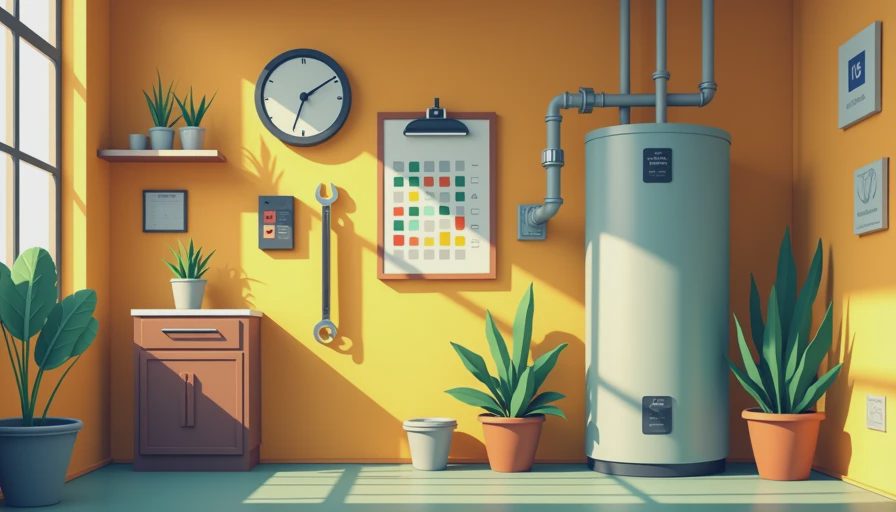
Once a month, look at the floor around the heater and scan the top connections for moisture, green corrosion, or rust. Do not touch wiring, gas controls, or hot pipes. You are looking for changes, not attempting a repair. Take a dated phone photograph if you see staining; comparing pictures makes slow deterioration easier to spot.
Twice a year, check whether the temperature is consistent at multiple faucets and listen for new noises during a heating cycle. Confirm that the pressure-relief discharge pipe is present and terminates safely, without trying to test or manipulate the valve yourself. If the heater is in an attic or upper-level closet, inspect the surrounding ceiling and flooring for discoloration.
Find the installation date from the label, purchase paperwork, or home inspection report. If the date is unknown and the unit shows corrosion, treat it as older rather than assuming it has years left. This small record also helps a plumber quote replacement work accurately.
How insurance fits into the decision
Homeowners insurance typically focuses on sudden, accidental water damage, not the cost of replacing an old appliance that failed from wear and tear. A policy might respond differently when a covered burst damages flooring or drywall, but the deteriorated water heater itself is commonly excluded. Coverage details, deductibles, and maintenance exclusions vary, so do not plan your replacement budget around an insurance payout.
That distinction matters because a $1,500 preventive replacement can avoid a claim involving $5,000 to $15,000 in flooring, drywall, contents, and professional drying. It also avoids the disruption: moving furniture, cutting open walls, running fans for days, and discovering that a child’s stored photos or electronics were in the affected room.
If water is actively spreading, shut off the water supply to the heater if you can do so safely and contact a qualified plumber. If you smell gas, leave the area and contact the gas utility or emergency services rather than investigating the appliance yourself.
The decision to make today
So, how long do water heaters last? Plan on roughly 8 to 12 years for a traditional tank and 15 to 20 years for a well-maintained tankless system, while treating leaks, corrosion, worsening noise, and inconsistent hot water as more important than the calendar alone.
If your heater is approaching the end of that range, get one replacement estimate before it fails. Compare a standard tank option with any required upgrades, ask where the shutoff and drain route will be located, and budget for removal and disposal. You do not need to replace a healthy five-year-old heater just because an article gives an average lifespan. You do need a plan when age and warning signs start pointing in the same direction.
A ten-minute check today saves a ten-thousand-dollar call tomorrow. Now go walk your basement, utility closet, or garage. You have ten minutes.
No comments yet.