You’re standing beside the outdoor AC unit, looking at a label and wondering how much life is left in it. For most units, finding the goodman serial number age is straightforward: the first two digits give the year of manufacture, and the next two give the month. A serial number beginning 1806, for example, indicates June 2018. That is the manufacture date, not necessarily the installation date.
Read the first four digits
On a typical Goodman serial number, read the date as YYMM: two digits for the year, followed by two for the month. If the number begins 2109, the unit was manufactured in September 2021. If it begins 1502, the date is February 2015. The remaining digits identify the individual unit; you don’t need them to read this date code.
The month must fall between 01 and 12. A beginning such as 2314 is a reason to stop and double-check the number, not assume the equipment was made in a fourteenth month. You may be reading the model number instead, or a worn label may have turned one digit into another.
There’s one wrinkle: two year digits don’t identify the century on their own. If the equipment’s appearance, installation records, or other documentation makes the decade uncertain, ask Goodman or a qualified HVAC contractor to verify the full serial number. Don’t make a replacement decision based on an ambiguous date.
Where to find the serial number
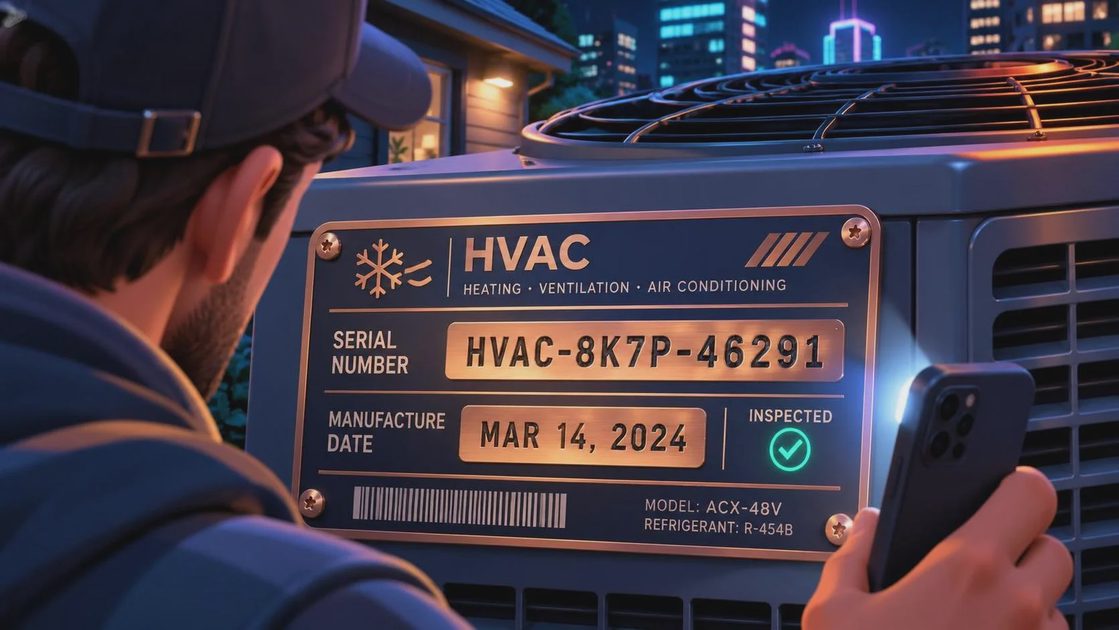
For a goodman serial number age check, look for the manufacturer’s data plate or sticker on the equipment cabinet. On an outdoor condenser or heat pump, it is commonly on the outside of the cabinet. On a furnace or indoor air handler, look on the cabinet and around the accessible label area. The label should identify both the model number and the serial number separately.
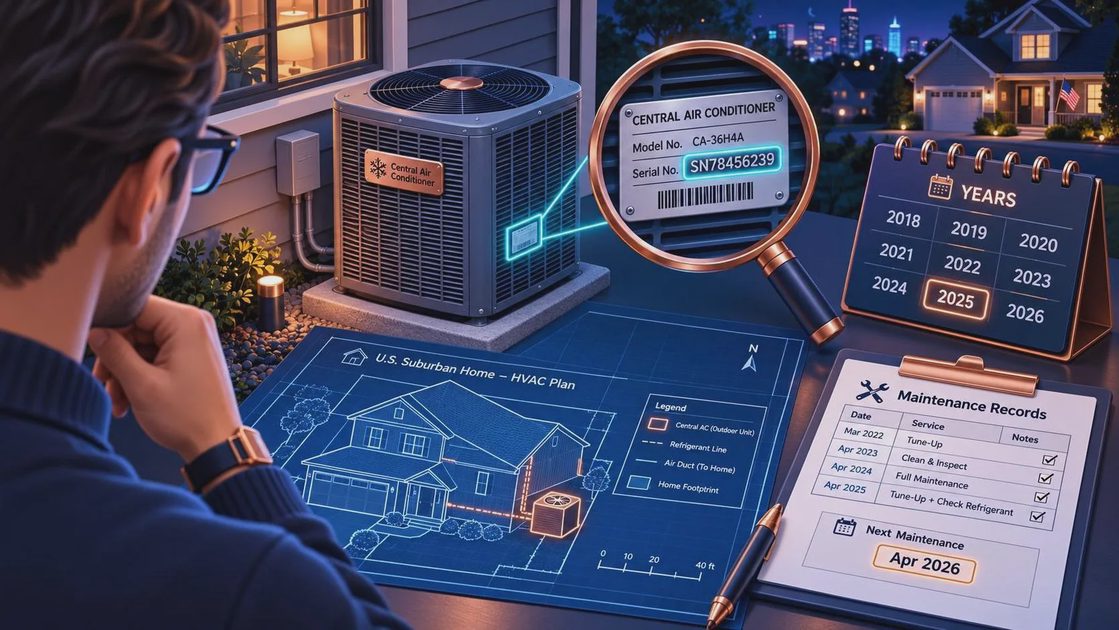
Use a flashlight and take a clear photo so you can enlarge the print. Record the complete serial number and model number, not just the first four digits. A contractor may need both to confirm what you own or research parts.
Don’t remove electrical panels or reach into the unit to find a label. If the plate is behind a panel or too damaged to read, leave it for a technician during a service visit. An old service invoice or installation paperwork may also contain the number, although the label on the equipment is the better starting point.
Check each piece of equipment separately
The outdoor unit and the indoor furnace or air handler can have different manufacture dates. They are separate pieces of equipment, and one may have been replaced without the other. If you have more than one system serving the house, check each one rather than assuming they all went in at the same time.
That distinction matters when you’re budgeting. A newer outdoor condenser does not automatically mean the furnace beside it is newer. Write down the location, model, serial number, and decoded date for each component. A note such as “upstairs outdoor unit, manufactured September 2021” is much more useful than “AC about five years old.”
Manufacture date also isn’t proof of installation date. Equipment can sit in inventory before it goes into a house. For warranty questions, find the installation invoice and ask the manufacturer or installing contractor to check the applicable terms. Registration, ownership changes, and the original installation date can affect coverage; the serial number alone doesn’t settle the question.
What the age means for maintenance
A goodman serial number age calculation tells you when to pay closer attention, not when to write a replacement check. Many central air conditioners and furnaces can serve for roughly 15 to 20 years, but actual life varies with use, maintenance, climate, and installation. Some need major work sooner; others keep operating beyond that range.
If the system is working normally, use the date to plan a professional maintenance visit and start a replacement fund as the equipment gets older. Ask the technician about the condition of the major components, any active leaks, and whether a recommended repair is urgent or can be monitored. A clean bill of health on an older system is useful information; age alone is not a failure.
If you’re buying a home, put the manufacture dates in the inspection record and ask for service and installation documents. An inspector’s general assessment is not the same as a full HVAC diagnosis. If the unit cannot be operated or there are signs of trouble, arrange a specialist evaluation before your inspection deadline when possible.
Know which warning signs change the timeline
A small amount of water from an outdoor cooling unit can be normal in some operating conditions. Water collecting around an indoor furnace or air handler is different: it deserves a prompt check because a blocked drain or another fault can damage nearby finishes. Turn off cooling if water is actively spreading, and contact an HVAC professional. Avoid electrical components and wet areas around them.
Call for service promptly if the system repeatedly shuts off, makes a new grinding or loud banging sound, or fails to heat or cool adequately. Those symptoms matter more than whether the label says the unit is 12 or 18 years old. When you call, have the model and full serial number ready.
A gas smell or a carbon monoxide alarm is an emergency, not a maintenance appointment. Leave the building immediately, avoid switches and flames, and call the gas utility or emergency services from outside. Don’t go back in until responders say it is safe.
Use the date to make a repair decision
When a technician recommends a major repair, request a written estimate and ask what problem it addresses, whether parts are available, and whether the rest of the system has known issues. Compare that with a replacement quote that spells out the equipment and installation work. Local labor, system size, and the scope of the job can make costs vary substantially.
A repair can make sense on an older unit if the fault is isolated and the rest of the equipment is in reasonable condition. Replacement deserves a closer look when expensive failures recur or a major component needs work near the end of the system’s expected life. Neither choice should be made from the date code alone.
Today, photograph each equipment label and save the decoded dates with your home records.

No comments yet.