You are standing in the basement after a hard rain, looking at a completely dry floor. Good news, right? Usually. But when I inspect a house, I still look at the water heater pan, exposed pipe joints, toilet supply lines, and the ceiling below every bathroom. Plumbing maintenance is not about spending Saturday rebuilding a faucet. It is about noticing the small signal before it becomes a claim.
I used to write checks for this. Now I write about it so you do not need the check. The most expensive plumbing losses I saw rarely began with a dramatic burst pipe. They started with a slow drip, a loose connection, or a toilet that rocked slightly for months. A ten-minute check today saves a ten-thousand-dollar call tomorrow.
What plumbing maintenance actually includes
Good plumbing maintenance has three jobs: find active leaks, identify parts approaching failure, and confirm that water is going where it should. Start under every sink with a flashlight. Look for mineral deposits, swollen cabinet bottoms, dark wood, or a faint sewer smell. A dry cabinet with a white crust around the shutoff valve is not normal; it is evidence that water has been escaping and evaporating.
Check toilets by looking at the floor around the base and gently noticing whether the bowl moves when touched. Do not confuse a cold tank with a leaking tank. Condensation can appear during humid weather, while a stained floor or soft flooring suggests a different problem. Listen after flushing. Water that continues running for several minutes deserves attention, even if the monthly bill has not changed much.
Under the kitchen sink, inspect the dishwasher hose, garbage disposal connections, and the trap. These areas commonly hide leaks because the cabinet base catches water before it reaches the floor. In a two-story house, inspect the ceiling below bathrooms for yellow rings, bubbling paint, or a musty smell.

The claims lesson: slow leaks do the most sneaky damage
Case file from my adjusting days: a homeowner noticed a small brown mark on the dining-room ceiling beneath an upstairs bathroom. The mark was about the size of a coffee mug, so the family painted over it. Six months later, a contractor opened the ceiling and found damaged drywall, wet insulation, and deteriorated subfloor around a toilet. The eventual repair was roughly $8,600, including drying, removal, and flooring replacement.
That is why plumbing maintenance should focus on duration, not just volume. A gallon dumped onto a basement floor is obvious. A tablespoon escaping behind a toilet every day is quiet, but it keeps materials damp long enough to create a much larger repair. Insurance coverage for gradual damage can be limited or excluded, while sudden accidental water damage is treated differently under many policies. Do not assume a policy will pay for a neglected leak.
The practical threshold is simple: any active drip, damp cabinet, recurring stain, or soft flooring deserves a professional assessment soon. If water is running freely, shut off the nearby valve if you can do so safely and call promptly. Waiting for a convenient weekend is how a $150 service visit becomes a $2,000 drying job.
Seasonal plumbing maintenance for real houses
In freezing climates, inspect exposed pipes in garages, crawlspaces, and exterior walls before the first deep freeze. A pipe does not need to burst in the living room to cause damage; a split line behind a finished wall can run for hours before anyone notices. Insulation and proper heat are prevention measures, but a plumber should handle questionable piping, inaccessible sections, and recurring freezing.
In warmer areas, outdoor hose bibs, irrigation connections, and washing-machine supply lines deserve more attention. Sun exposure can make rubber hoses brittle, and landscape work can disturb buried lines. Before a vacation, check that toilets are not cycling, faucets are not dripping, and the water meter is quiet when every fixture is off. A moving meter is a reason to investigate, not a mystery to ignore.
Water heaters also belong on the seasonal list. Look around the tank or beneath the cabinet for rust, moisture, or a relief valve that has discharged. A conventional tank often lasts around 8 to 12 years, although installation quality and water conditions matter. Replacing an aging unit before failure can cost about $1,200 to $3,500, but emergency removal after a leak can add flooring, drywall, and cleanup costs.
What deserves a plumber now versus later
Not every plumbing defect requires an emergency call. A faucet that drips into a sink is irritating and wasteful, but it is usually less urgent than a wet wall or a toilet leaking onto a wood floor. The decision should follow the path of the water and the material it can damage.
Call promptly for water appearing at a ceiling, a supply line that is visibly wet, a sewer odor that persists, sewage backing up, a pipe that freezes repeatedly, or a water meter that moves with all fixtures closed. These conditions can worsen behind walls or under floors. A plumber may charge $100 to $250 for a service visit, with repairs ranging from a modest valve replacement to several thousand dollars for concealed piping.
You can schedule routine service for a noisy faucet, a slow drain that is not backing up, minor corrosion, or a toilet that occasionally runs. Do not pour chemical drain cleaner into a recurring problem and call the issue solved. It can mask a developing blockage and create a hazard for the person who later opens the line. Plumbing maintenance means diagnosing the cause, not just silencing the symptom.
A 15-minute homeowner inspection
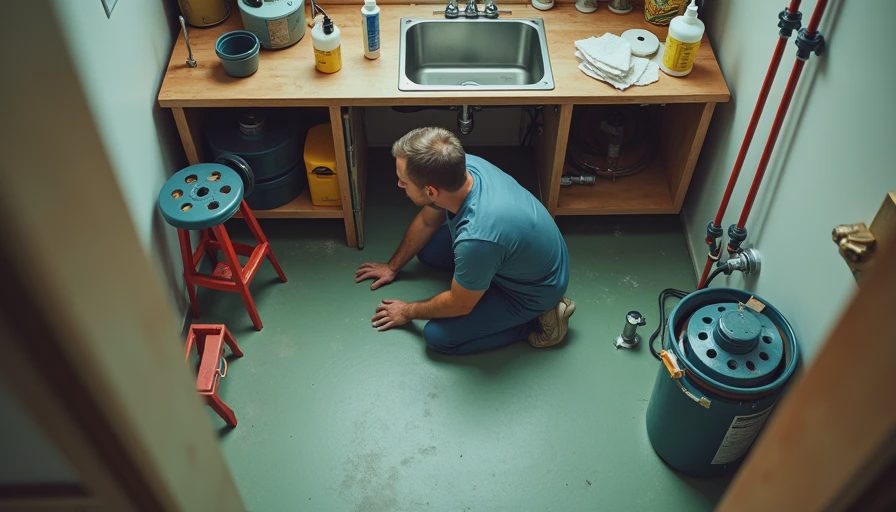
Once a month, walk the house with a flashlight. Look beneath every sink, behind the washing machine, around the water heater, and at the ceiling below upstairs bathrooms. Touch nothing electrical and do not enter unsafe crawlspaces. You are looking for evidence: droplets, stains, corrosion, warped materials, unusual odors, and sounds that continue after a fixture is off.
Record the date and location of anything questionable. A photograph beside a coin gives a useful sense of size when a stain changes. If the same mark grows from a quarter to a dinner plate, the timeline matters to both a contractor and an insurer. Also note the location of the main water shutoff so every adult in the house can find it quickly.
This is the inexpensive side of plumbing maintenance. A flashlight costs little, a professional leak evaluation commonly costs far less than demolition, and a written record prevents you from relying on memory. You do not need to diagnose a failed seal or identify a hidden pipe material. You need to recognize when the house is giving you evidence.
The cost of waiting
A small repair often lands in the $150 to $500 range: a shutoff valve, supply connection, toilet component, or accessible trap. Opening a wall can push the total toward $500 to $2,000 before restoration. Water extraction, damaged flooring, cabinet replacement, and mold-related work can move a neglected event into the several-thousand-dollar range quickly.
I have seen homeowners spend $5,000 trying to prevent a $200 problem, so I am not recommending unlimited service contracts or replacing every pipe that looks old. The better investment is targeted plumbing maintenance: check the locations that fail most often, respond to active evidence, and have an aging system evaluated before a holiday weekend or a cold snap.
Start with the room directly below each bathroom, the cabinet under the kitchen sink, the washing-machine connections, and the water heater. Those four areas can reveal a surprising amount in minutes. Now go walk your basement and look up at the ceilings. You have ten minutes.


No comments yet.