Goodman AC lifespan is a question I get from homeowners at least once a week. It usually follows a moment of panic — a warm second story, a strange clicking sound from the condenser, or an electric bill that's suddenly 40 percent higher than last July. Goodman is one of the most common brands in the Denver area, and I've seen units everywhere from 1980s ranch houses to new builds. Here's what the real-world data looks like, what breaks first, and when you should stop paying for repairs.
What Most Homeowners Get Wrong About Goodman AC Lifespan
Most manufacturers rate their units for 15 to 20 years, and Goodman is no exception. But that rating assumes perfect conditions: clean coils, proper refrigerant charge, regular maintenance, and a unit that's correctly sized for the home. In real life, the median Goodman AC lifespan lands closer to 12 to 15 years. I've inspected 25-year-old units still running, and I've seen 8-year-old units that needed full replacement. The difference usually comes down to installation quality and maintenance, not the brand.
The Real-World Numbers: How Long Does a Goodman AC Actually Last?
When I talk about Goodman AC lifespan in practical terms, I pull out my claims adjuster hat. I used to write checks for AC replacements, so I have a good sense of what fails and when. For Goodman units in the Denver suburbs, the typical failure points start showing up around year 10: the capacitor goes, then the contactor, then the compressor starts struggling on 95-degree days. A single capacitor replacement costs $150 to $300. The compressor, on the other hand, can run you $1,800 to $2,500 just for the part, before labor. Once the compressor dies, you're usually looking at a $4,000 to $6,000 repair bill. That's when most homeowners start shopping for a new system.
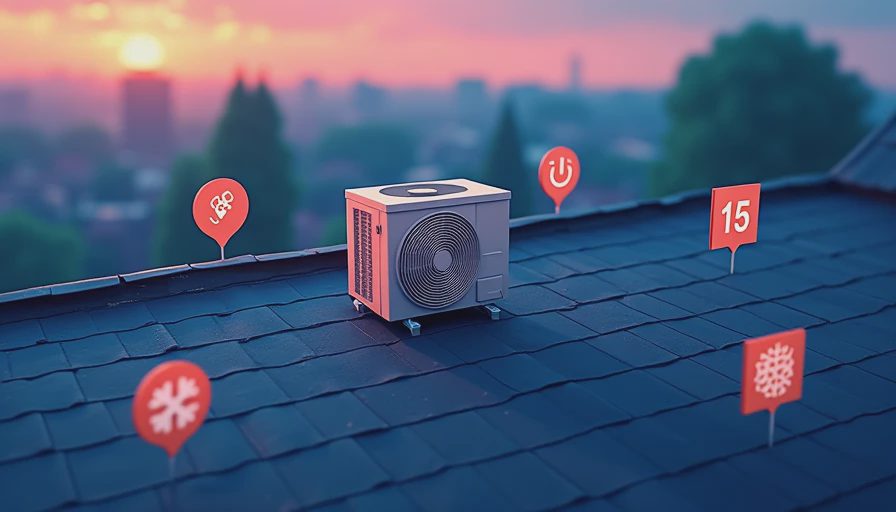
Five Signs Your Goodman AC Is Nearing the End
Here are the warning signs I tell homeowners to watch for. One: the air from the vents is cool but not cold — a 15-degree temperature drop instead of the usual 20. Two: the unit cycles on and off more frequently than a normal 15-minute run. Three: the condenser makes a grinding or squealing sound that gets louder after a few minutes. Four: your energy bills climb 20 to 30 percent without a rate change or a heat wave. Five: you've already paid for two repairs in the last three years, and the unit is older than 12. Each of these by itself doesn't mean the unit has reached the end of its life, but two or more together should get you scheduling a professional evaluation.
Repair vs. Replace: A Cost Breakdown
The rule of thumb I give my clients is simple: if the repair costs more than half the price of a new unit, replace it. For a mid-efficiency Goodman replacement, installed cost typically runs $3,800 to $5,500 for a 3-ton unit in the Denver market. High-efficiency units with variable-speed compressors run $6,000 to $8,500. If your compressor is quoting $2,500 to repair on a unit that's already 13 years old, that's throwing money at an aging system. You'll pay for the repair, and then the evaporator coil goes the following summer. A common scenario I see: a homeowner spends $1,200 on a coil replacement, then $600 on a blower motor, and by year 15 they've spent $3,000 on a system worth $1,500. That's when I advise considering replacement. When you track the full Goodman AC lifespan with maintenance records, most units in our area make it to year 12 without a major failure.

How to Extend Your Goodman AC Lifespan
The single best thing you can do is change the air filter every 30 to 90 days. A dirty filter makes the blower work harder, raises the indoor coil temperature, and directly shortens the Goodman AC lifespan. Next, have a licensed technician do seasonal tune-ups — spring and fall. A tune-up costs $80 to $150, and it catches refrigerant leaks early. A leak that's fixed early costs $200 to $400; the same leak ignored all summer can destroy the compressor and turn a small repair into a full replacement. Also keep the condenser coil clear. I see units buried in grass clippings, tucked under deck overhangs, and surrounded by storage boxes. Give it two feet of clearance on all sides and wash the coil with a garden hose once a year. That alone can add three to five years.
When to Call a Pro (and When Not To)
There's a difference between a DIY check and a professional diagnosis. You can clean your condenser coil, change the filter, and inspect the drain line for clogs. But if the system won't start, the breaker trips repeatedly, or you hear a rattle that sounds like metal-on-metal, stop and call a technician. Refrigerant is under high pressure, and electrical panels are not the place to experiment. My rule of thumb: any repair that requires a manifold gauge or a multimeter is a job for a pro. A ten-minute check today saves a ten-thousand-dollar call tomorrow. That's true for your AC as much as anything else in the house. And if you're already looking at replacement, get three quotes from local HVAC companies — and make sure they do a proper Manual J load calculation instead of guessing the size.
So the honest answer to the Goodman AC lifespan question is: with good installation and basic upkeep, plan for 12 to 15 years. Past that, start setting aside about $150 a month for the eventual replacement. Now go give your condenser a good look. You have ten minutes.


No comments yet.